

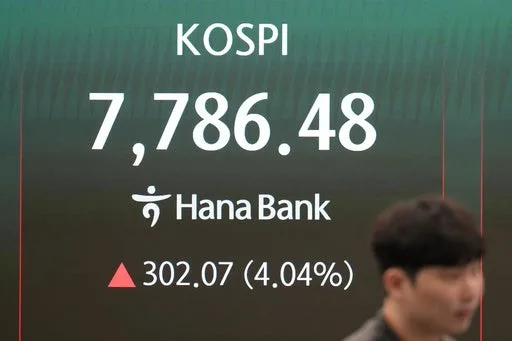
U.S. stock markets fell sharply as investors offloaded shares in artificial intelligence-related companies, reversing early gains and pushing major indexes lower. The S&P 500 slid over 1.5%, dragged down by steep declines in key AI chipmakers. The tech-heavy Nasdaq Composite was hit harder, dropping close to 3%, while the Dow Jones Industrial Average also fell amid the volatility.
Shares of companies producing crucial components for AI technologies, such as computer chips and memory, swung wildly throughout trading. Micron Technology’s stock, which had surged one day earlier, plunged dramatically after an initial midday rise evaporated. Similarly, Marvell Technology and Advanced Micro Devices erased early advances and endured significant losses. Nvidia, Wall Street’s most valuable company, declined by over 3%, substantially weighing on the overall market.

These fluctuations follow a broader sell-off last week that raised concerns over whether AI stocks might be entering a prolonged downturn or if this is simply a correction to temper overly optimistic valuations. Meanwhile, excitement persists in the AI sector with prominent companies preparing to go public. OpenAI, the developer behind ChatGPT, recently filed confidential documents for an initial public offering (IPO), and SpaceX is reportedly planning its own IPO launch potentially within days.
Despite the pressure from AI stocks, other sectors showed resilience, with more S&P 500 companies gaining than falling. This came as oil prices retreated due to renewed hopes for a deal between the United States and Iran to reopen the Strait of Hormuz, a critical passage for global oil shipments. Brent crude prices dropped nearly 3%, easing some inflationary pressure. However, oil prices rebounded somewhat after U.S. President Donald Trump blamed Iran for downing a U.S. military helicopter near the strait, signaling potential further tension.
Higher oil prices linked to geopolitical tensions have contributed to rising inflation in the U.S., increasing costs for consumers and pushing bond yields higher worldwide. Yields on the 10-year U.S. Treasury note fell slightly during the session but remain elevated compared to pre-conflict levels.
Market participants are also anticipating upcoming U.S. inflation data scheduled for later in the week, which could further influence stock and bond markets amid these volatile conditions.