

Wall Street is poised to open with modest gains after a turbulent week, as oil prices retreat from recent highs that have strained markets and industries reliant on energy. Futures for the S&P 500 advanced by 0.4%, the Dow Jones Industrial Average inched up less than 0.2%, while Nasdaq futures gained 0.8%, indicating cautious investor optimism.
Oil prices eased notably, with Brent crude sliding $1.42 to $92.83 per barrel after briefly surpassing $98. U.S. benchmark crude fell $1.68 to $89.62, holding significantly above pre-conflict levels. These elevated prices stem from geopolitical tensions in the Middle East, particularly disruptions near the Strait of Hormuz, a vital oil transit route adjacent to Iran. The conflict has effectively halted much shipping traffic in the area, tightening supply and pushing prices higher.

The surge in fuel costs has heavily impacted the airline industry, which is beginning to show signs of recovery as investors respond positively to the easing oil prices. U.S. airlines—burdened by jet fuel expenses that hit over $6 billion in April, up 78% from the previous year—have adjusted by raising fares, trimming schedules, and canceling flights. Shares of Delta, American, and United Airlines each climbed between 1% and 2%, reflecting improved outlooks amid the energy market’s volatility.
Rising oil and energy costs have broader economic implications, contributing to increased inflation that affects consumer bills and bond yields alike. The yield on the 10-year Treasury note, which influences borrowing costs and investment valuations, stabilized around 4.55% early Tuesday, marking an advance from the 4.01% level before the Middle East conflict erupted. Higher yields tend to pressure stocks and can slow down economic growth.
Inflation data from the U.S. government is anticipated this week, with wholesale price figures scheduled for release Tuesday and consumer price reports expected Wednesday. With inflation above the Federal Reserve’s 2% target and employment conditions steady, market watchers do not anticipate an imminent rate cut. Instead, some experts believe the Federal Reserve may consider raising interest rates later this year, with policymakers set to announce their latest decision soon.
Individual companies also influenced market sentiment. Shares of J. M. Smucker Co., known for snacks and spreads, rose 3% after reporting stronger-than-expected sales and profits, signaling resilience in consumer staples despite economic pressures.
Meanwhile, the U.S. housing market continues to face headwinds. Elevated mortgage rates and soaring home prices have weighed on sales since 2022, limiting activity despite occasional data releases that draw market attention.
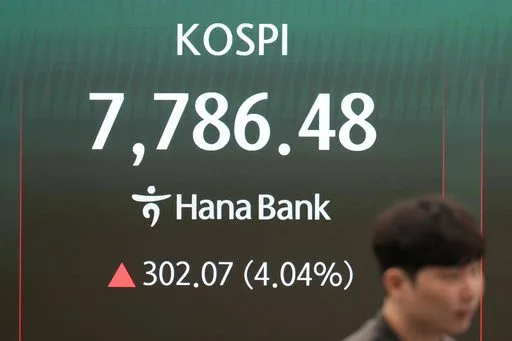
Globally, European markets showed mixed movements midday, with Germany’s DAX rising 0.5%, Paris’s CAC 40 gaining 0.9%, and Britain’s FTSE 100 slipping 0.3%. In Asia, South Korea’s Kospi rebounded sharply, climbing 8.2% to nearly offset the previous day’s losses, bolstered by SK Hynix’s announcement of a data center partnership with Nvidia.