

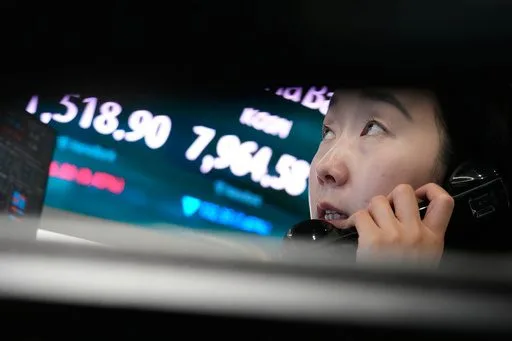
Wall Street futures pointed toward a fresh decline for technology stocks following a US military strike against Iran, while oil prices jumped amid renewed Middle East tensions. Ahead of the opening bell, futures for the S&P 500 slipped just over 1%, with the tech-heavy Nasdaq falling more sharply by around 1.6%, signaling investors' growing unease.
The oil market reacted strongly, with Brent crude climbing above $93 per barrel—its highest since before the conflict began earlier in the year—and US benchmark crude rising past $90. The surge came as hopes dimmed for reopening the strategically crucial Strait of Hormuz after an Army helicopter crash near the area was blamed on Iran, escalating fears of prolonged instability.

Market watchers highlighted the difficulty in achieving a lasting ceasefire that would ensure the free flow of vessels through the Strait. The seasonal rise in US energy demand compounded supply concerns, putting further upward pressure on prices. This development adds to an atmosphere of uncertainty just as US inflation data for May, expected to show a continued rise, is set to be released.
The technology sector faced notable selling pressure, especially among companies linked to artificial intelligence. Semiconductors and AI-related stocks led the declines, with chipmaker Micron dropping over 4% and Nvidia sliding around 2.5%. South Korean chip manufacturers also fell, contributing to weakness in regional markets, as Samsung Electronics and SK Hynix dropped significantly.
Not all sectors moved lower. Consumer services company Cracker Barrel posted stronger-than-expected quarterly profits, prompting its shares to surge over 10% and the company to raise its full-year outlook. In Europe, major indexes slipped lower amid the global market jitters, with Britain’s FTSE 100 down slightly and Germany’s DAX and France’s CAC 40 facing steeper declines.
Elsewhere in Asia, Japan’s Nikkei 225 reversed early gains after data revealed the fastest increase in wholesale prices in over three years, stoking inflation concerns. Technology and telecommunications firm SoftBank also faced downward pressure as investors reacted to the broader volatility.