

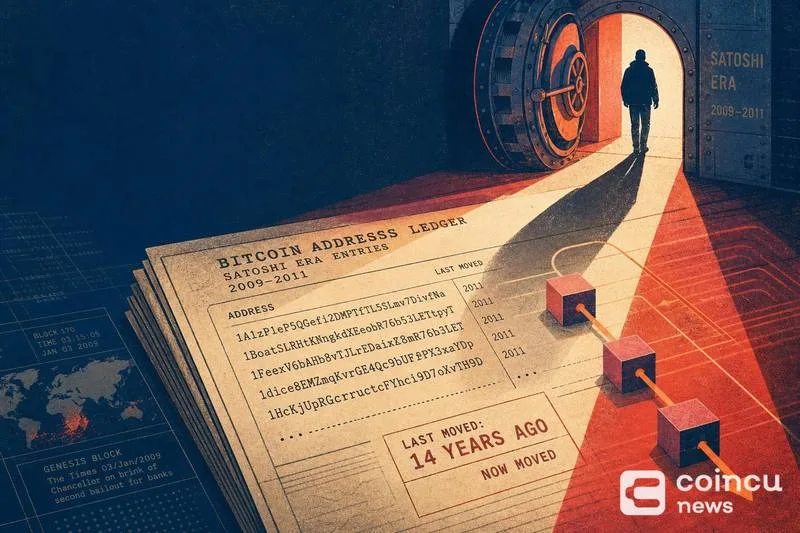
Bitcoin addresses inactive for approximately 14 years reactivated, shifting a massive batch of 80,000 BTC. These wallets date back to Bitcoin’s initial circulation phase, often referred to as the Satoshi era, the time when the cryptocurrency's creator was still engaged with the network. Despite their age, there is no confirmed evidence directly linking these wallets to Satoshi Nakamoto himself.
The remarkable inactivity and volume caught the attention of market observers. Most coins mined during Bitcoin’s earliest years have remained untouched, making this movement an infrequent and significant event on the blockchain. The wallets’ transaction histories show a clear dormancy gap from their first funding around 2011 until the recent transfers in 2025.

Blockchain records confirm these wallets stood silent for over a decade, with the reactivation proving notable due to the potential market impact of such a large transfer. However, the intent behind these movements remains unclear. Analysts cannot determine from available data whether these coins were moved for liquidation, consolidation into new wallets, or other purposes, as the chain offers no indication of destination type, such as exchange wallets.
Movements of such a dormant supply raise speculation about possible sell pressure in the market. Given the high value of 80,000 BTC—even at conservative price levels—the transfer could translate into billions of dollars. Historically, transfers of this scale have triggered significant market responses, especially when funneled through exchange platforms.
Still, market experts emphasize that the mere movement of coins from Satoshi-era addresses does not inherently signal imminent selling activity. Without concrete evidence the coins entered exchange wallets, attributing any price impact remains speculative. The symbolic importance lies more in the rare reactivation of these old wallets, representing coins that have remained out of circulation for nearly the entire history of Bitcoin.