

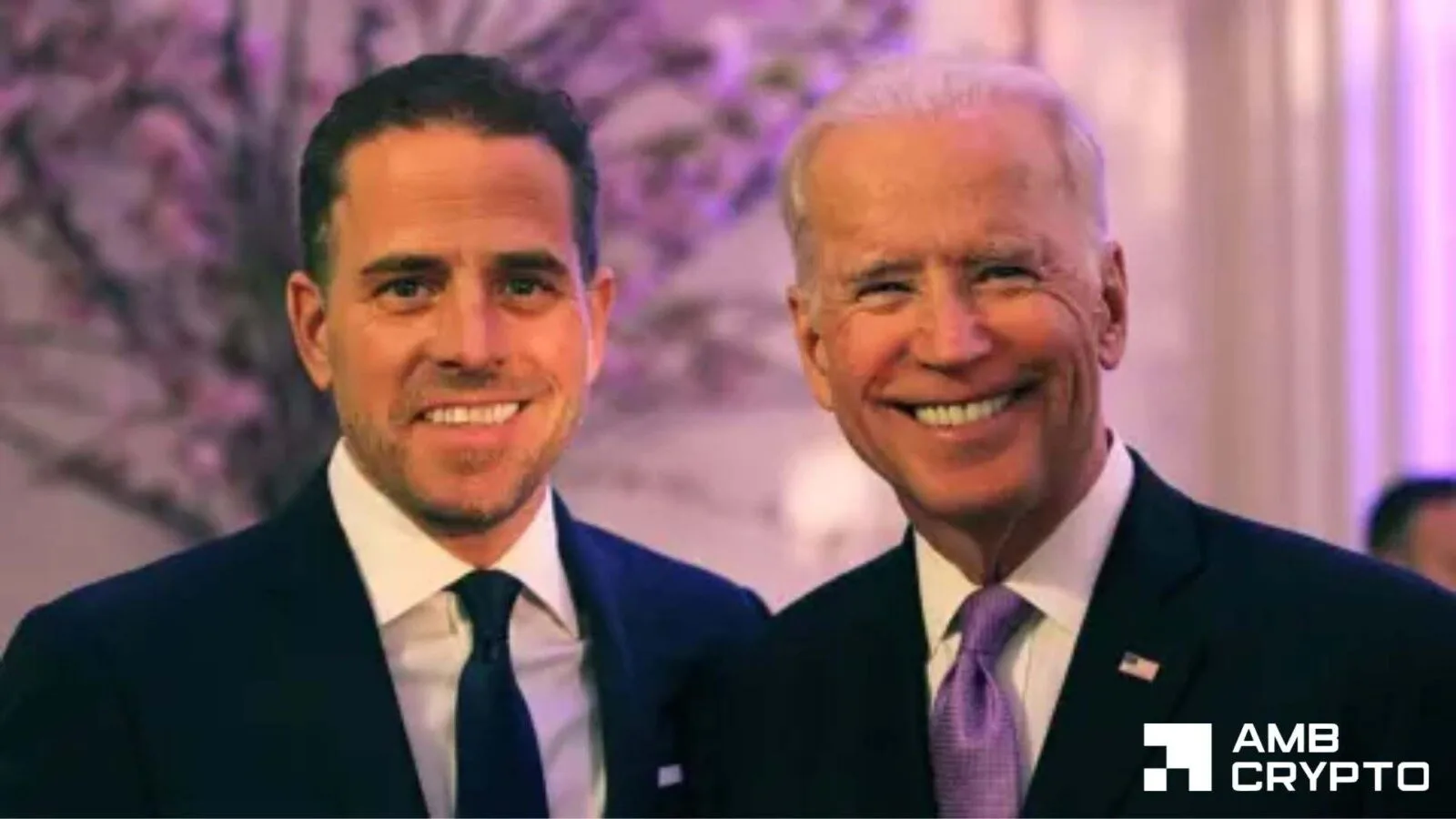
Hunter Biden has publicly expressed backing for Bitcoin and blockchain technology, describing them as the inevitable future of finance. In a recent online exchange, he highlighted the disruptive potential of decentralized systems while cautioning that established banks will fiercely oppose these changes.
This stance sharply contrasts with the Biden-era federal regulatory environment, which has intensified scrutiny of the cryptocurrency sector. Under the current administration, the Securities and Exchange Commission (SEC) has taken enforcement actions against major exchanges, DeFi platforms, and crypto firms, citing concerns such as money laundering and unregulated securities offerings. Important players targeted include Binance, Coinbase, Uniswap, MetaMask, Ripple, and Aave.

The crackdown has extended beyond investigations. Several crypto startups have experienced banking challenges, facing de-banking or exclusion from traditional financial services, as custodying cryptocurrencies remains contentious for many banks. Efforts to soften these policies through bipartisan legislation like the CLARITY Act have faced resistance, with President Biden vetoing attempts to ease restrictions on stablecoin yields.
In response, the crypto industry has shifted its political strategy. After enduring regulatory headwinds, it supported a pro-crypto agenda during the 2024 elections, notably backing Republican candidates seen as more favorable to crypto innovation. However, recognizing the potential for a Democratic-controlled Congress, the sector is now cultivating alliances with pro-crypto Democrats, aiming to establish clear regulatory frameworks regardless of partisan shifts.
Despite Hunter Biden’s public endorsement of Bitcoin, he is not widely viewed as a front-runner for the 2028 Democratic presidential nomination, where other contenders hold stronger polling positions. His pro-crypto stance nonetheless signals an intriguing divergence within the party on how to approach the evolving digital assets landscape.
Hunter Biden’s comments underscore the growing tension between established financial institutions committed to the current fiat system and emerging blockchain technologies vying for mainstream adoption. As the regulatory environment remains in flux, the cryptocurrency market watches closely how political endorsements and policies will shape its future integration into the broader economy.