

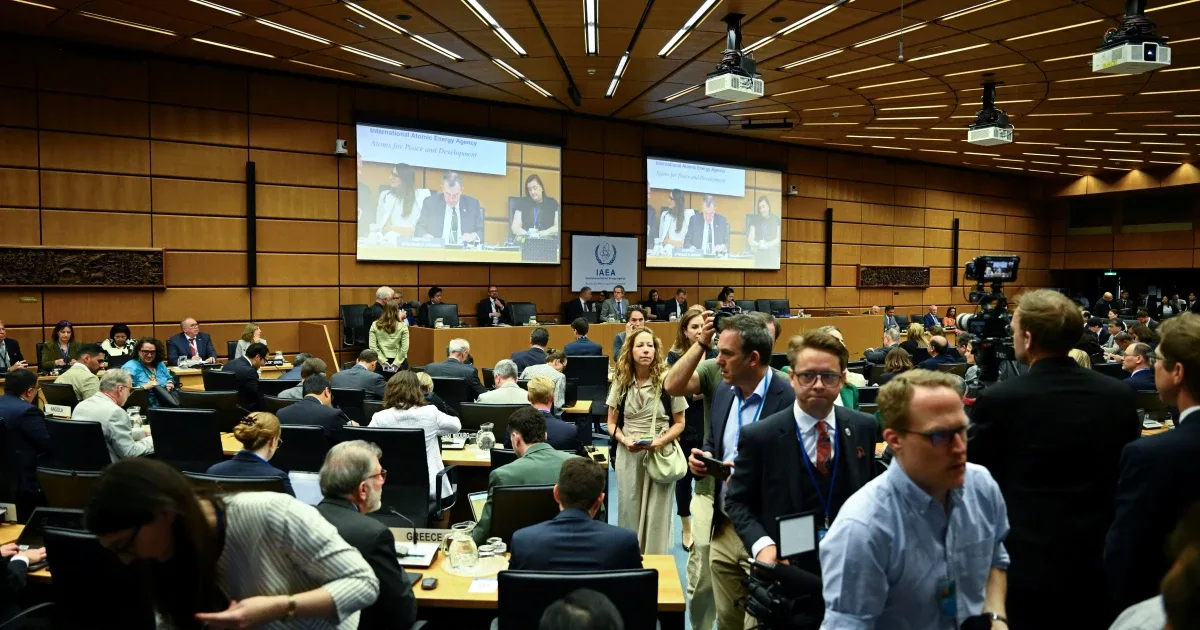
Nearly a year after a series of strikes on Iran’s nuclear facilities, Tehran has yet to provide a full account of its enriched uranium reserves, prompting growing concern from the International Atomic Energy Agency (IAEA). The agency’s board called on Tehran to declare its remaining stockpiles and permit inspections, emphasizing that unresolved questions about nuclear material at damaged sites—including uranium near weapons-grade levels—continue to threaten global nonproliferation efforts.
The IAEA board voted decisively to demand transparency, with a strong majority backing the resolution. Since the attacks, which disrupted safeguards verification, Iran has hindered access to key sites. The agency last verified significant quantities of highly enriched uranium just before inspections were suspended for safety reasons. Without renewed cooperation, the agency warned that any diplomatic deal would be undermined by a lack of on-the-ground monitoring.

This impasse stands in stark contrast to the 2015 Joint Comprehensive Plan of Action (JCPOA), which imposed strict limits on Iran’s uranium stockpile and enrichment activities. Back then, Iran agreed to reduce its enriched uranium to a fraction of current estimates and limit its centrifuge use, with continuous IAEA oversight ensuring compliance. Today, Iran’s estimated uranium stockpile vastly exceeds JCPOA limits, and restrictions on enrichment sites no longer apply. Despite calls from diplomatic supporters for a new deal, the circumstances represent a far broader enforcement challenge than past agreements managed.
Complicating the situation, Iran suspended its cooperation with the IAEA under domestic legislation, further hindering verification efforts. UN sanctions previously lifted under the JCPOA framework have been reinstated through snapback mechanisms, demanding Iran halt enrichment, heavy-water production, and nuclear reprocessing. Yet, these measures have struggled to compel transparency or prevent stockpile growth.
The core dilemma facing the international community is balancing the desire for renewed diplomatic engagement with the need for verifiable safeguards. Without effective monitoring and accountability, Tehran’s nuclear program remains a source of uncertainty and potential escalation. Experts warn that a fragile or symbolic agreement lacking enforcement mechanisms will likely delay rather than resolve the nuclear challenge posed by Iran.