

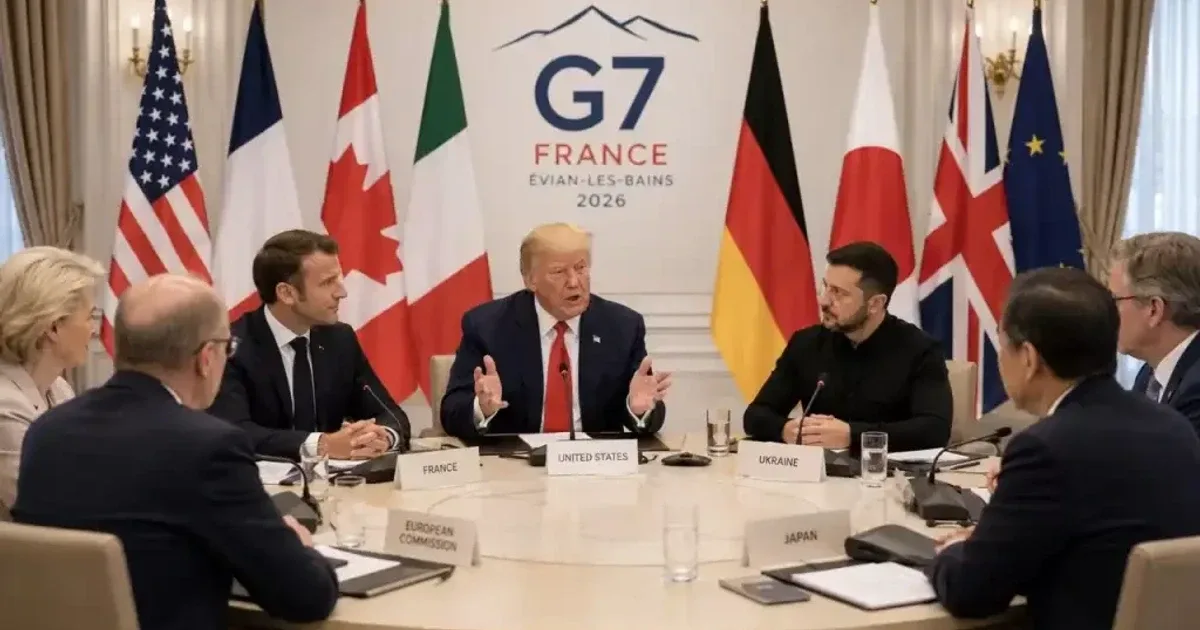
The Group of Seven (G7) nations pledged to accelerate and broaden military assistance to Ukraine, promising more air defense systems, interceptors, and long-range weaponry to bolster Kyiv’s battlefield capabilities. In tandem, the alliance announced plans to toughen sanctions on Russia's energy sector, aiming to weaken the Kremlin’s war effort over time.
In a joint declaration issued during their summit in Evian-les-Bains, the G7 reaffirmed support for Ukraine’s sovereignty and praised its resilience amid ongoing conflict. The declaration highlighted recent progress made by Ukrainian forces and described the war as entering a phase with renewed momentum. It also noted readiness to extend export licenses to Ukraine, a move designed to expand domestic military production and potentially hasten the delivery of weapons and equipment.

Canadian authorities swiftly followed up the summit’s commitments with a broad new sanctions package targeting 162 individuals, entities, and vessels linked to Russia’s defense operations and energy revenues. This builds on Canada’s existing sanctions regime, which has already encompassed thousands of persons and hundreds of vessels connected to Moscow’s war apparatus. The move underscores the importance of translating summit rhetoric into concrete actions.
Ukrainian leadership welcomed the announcements, emphasizing that Russia remains unable to secure victory. New sanctions discussed at the summit focus on limiting Russian oil exports, curbing banking sector capabilities, and disrupting military production chains—dual pressure designed to impact both immediate battlefield dynamics and the longer-term sustainability of Russia’s military campaign.
The G7’s strategy reflects an understanding that enhanced air defenses and weapons can alter conditions on the ground relatively quickly, while stricter sanctions on energy and finance are intended to constrict resources feeding Moscow’s war economy gradually. The continued flexibility around export licenses to Ukraine also signals a potential increase in the pace and scale of military assistance, contingent on swift government approvals and financing.
Additionally, the G7 linked its sanctions push with broader geopolitical developments, including support for the U.S.-Iran nuclear deal and efforts to ensure stability in the Strait of Hormuz—important factors that shape global energy flows and strategic leverage against Russia.
Despite declarations of unity, challenges remain for the coalition, which has wrestled with maintaining coordinated pressure since Russia’s 2014 invasion of Ukraine triggered the group’s exclusion of Moscow. The effectiveness of the G7’s measures will depend on the speed and scale at which member countries translate these commitments into tangible support, particularly before winter conditions exacerbate the conflict’s toll.