

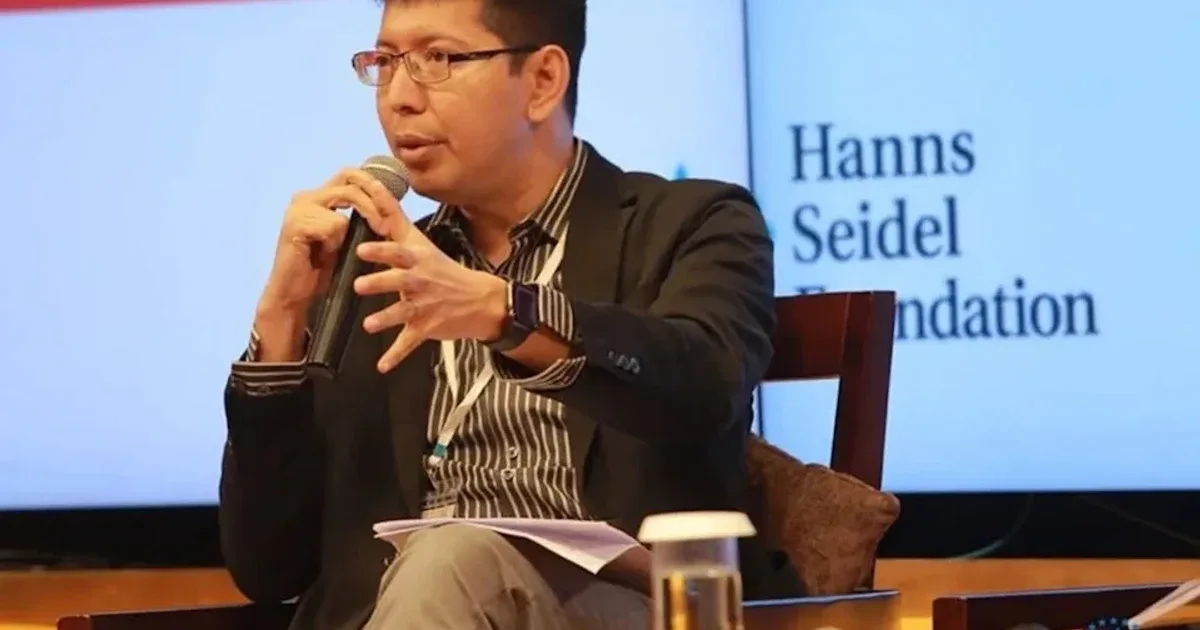
A Myanmar scholar and founder of a prominent think tank was detained by Chinese authorities in Kunming while attending an academic workshop, prompting demands for his immediate release from his organization. The incident spotlights the risks associated with cross-border academic work involving sensitive topics such as regional conflicts, national security, and bilateral relations between China, Myanmar, and the United States.
Min Zin, the detained academic, was at the workshop solely for scholarly purposes, according to his think tank, ISP-Myanmar. The organization has called on China to release him unconditionally. Chinese officials, however, have accused Min Zin of espionage and endangering national security, stating that the case would be handled according to their laws. The detention reportedly occurred in early June, and Chinese authorities informed the United States, as confirmed by the U.S. State Department.

Min Zin is a significant figure in Myanmar’s pro-democracy landscape and scholarly community. He was involved in Myanmar’s 1988 democracy movement, studied at the University of California, Berkeley, and played a key role in establishing ISP-Myanmar, which now operates from abroad following Myanmar's 2021 military coup. The military takeover led to nationwide unrest and ongoing armed conflict, making research on Myanmar particularly sensitive.
The timing of Min Zin’s detention adds complexity to the case. It occurred shortly before Min Aung Hlaing, Myanmar’s military leader, visited China for discussions with President Xi Jinping. China’s role as a crucial foreign stakeholder in Myanmar’s internal politics and military relations underscores the geopolitical weight of this case. How Beijing manages politically charged issues like this detention reveals its tight control over research and political matters linked to both Myanmar and cross-border security concerns.
For the United States, the case reiterates ongoing challenges faced by American researchers working in China on subjects linked to national security or political affairs. While U.S. consular protocols allow for detained citizens to receive embassy assistance, the broader issue centers on the limits placed on academic freedom and mobility when sensitive topics arise in Sino-American exchanges.