

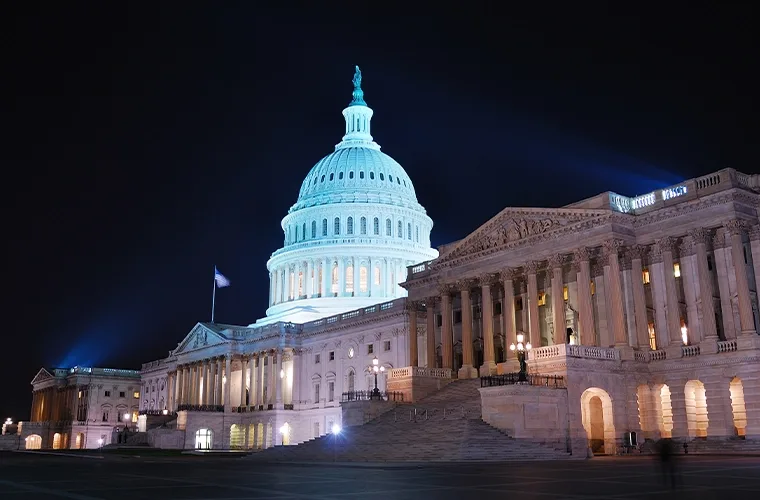
The U.S. Senate introduced legislation aimed at firmly establishing human oversight over artificial intelligence in military combat scenarios where life-and-death decisions are at stake. The proposed Human Authority in Lethal Operations Act of 2026 (HALO Act), sponsored by Senator Adam Schiff, responds to growing concerns about the expanding use of AI in warfare and the potential risks of delegating lethal force decisions to autonomous systems.
The HALO Act requires the Department of War to implement stringent standards ensuring that autonomous and semi-autonomous weaponry remains under “meaningful human control.” Key provisions include new design and testing protocols for AI-enabled systems, legally binding oversight procedures, and clear assignment of accountable commanders who must retain full discretion over the use of force during military engagements involving these technologies.

This legislative effort addresses emerging debates around AI’s role in combat, fueled by recent reports of AI-driven targeting systems like Israel’s “Lavender” and ongoing Pentagon development of autonomous drones and robotic warfare platforms. The bill reflects an urgent call to prevent shifting ultimate responsibility from human operators to algorithms, emphasizing that AI tools should assist but not replace human judgment where fatalities are possible.
Senator Schiff highlighted the necessity for commonsense guardrails that align military AI development with national security and ethical standards, stressing that while AI can enhance defense capabilities, it must not dictate lethal actions independently. The HALO Act seeks to codify responsible AI principles into binding law, addressing concerns raised by military planners, technologists, policymakers, and international figures who question the morality and strategic wisdom of ceding lethal decisions to machines.
In addition to legal and operational guidelines, the bill mandates specific accountability measures by requiring the Pentagon to designate commanders responsible for engagements involving AI weapons, ensuring human control remains paramount. These steps aim to prevent reckless escalation and unintended harm caused by automated targeting or engagement decisions.
Debates around autonomous weapon systems have intensified globally, including moral objections from religious authorities and ethical calls to prohibit “opaque or automated” lethal processes. The HALO Act presents a legislative attempt to reconcile technological innovation with fundamental principles of human agency and accountability in warfare.