

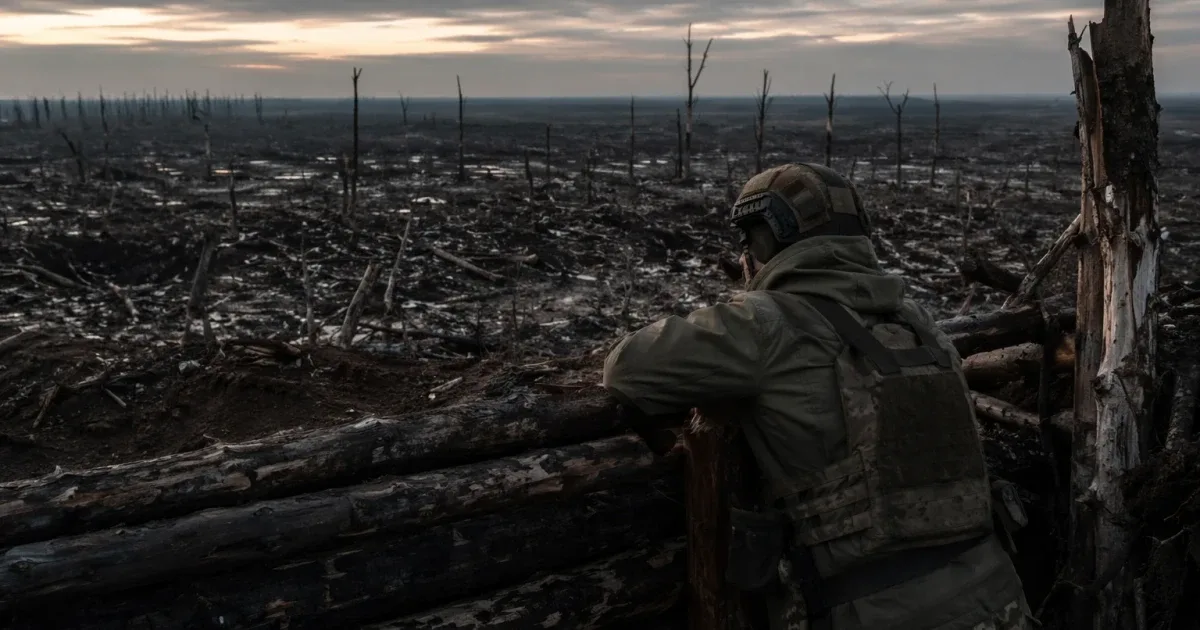
The ongoing conflict in Ukraine has now spanned 1,568 days, equaling the duration of World War I and highlighting how a 21st-century war can mirror the prolonged attritional combat seen in the trenches a century ago. Since Russia launched its full-scale invasion in early 2022, following years of unrest in eastern Ukraine, the fighting has evolved into a grueling battle of endurance marked by slow territorial advances and heavily fortified positions.
Experts note that the war’s static front mirrors World War I’s defining characteristic—exchanges of artillery bombardments and entrenched defenses with limited breakthroughs. According to analysis from the U.S. Army War College, the 2023-2024 fighting recalled this attritional logic. However, by 2025, advances in drone and battlefield awareness technologies transformed sections of the frontline into deadly “kill zones,” forcing commanders to rethink tactics related to movement and cover.

This technological shift has made resolving the conflict diplomatically more difficult. Moscow maintains demands for Ukrainian territorial concessions, particularly in the Donbas and other contested regions, complicating peace negotiations despite international calls for ceasefire.
The humanitarian impact has intensified alongside the stalled military conflict. The United Nations Human Rights Monitoring Mission reported one of the deadliest monthly tolls in March 2026, with hundreds of civilians killed or injured—an increase driven by renewed assaults on critical energy infrastructure paired with harsh weather conditions. The United Nations High Commissioner for Refugees estimates that over 10 million Ukrainians will need humanitarian aid and protection this year, underscoring the scale of displacement and crisis triggered by the war.
In a diplomatic overture, Ukrainian President Volodymyr Zelensky proposed direct talks and a complete ceasefire in mid-2026 while affirming his country’s readiness to continue fighting if necessary. This stance reflects the broader challenge both Ukraine and its Western supporters face: sustaining political will and societal resilience amid a prolonged and brutal confrontation reminiscent of a century-old model of warfare.