

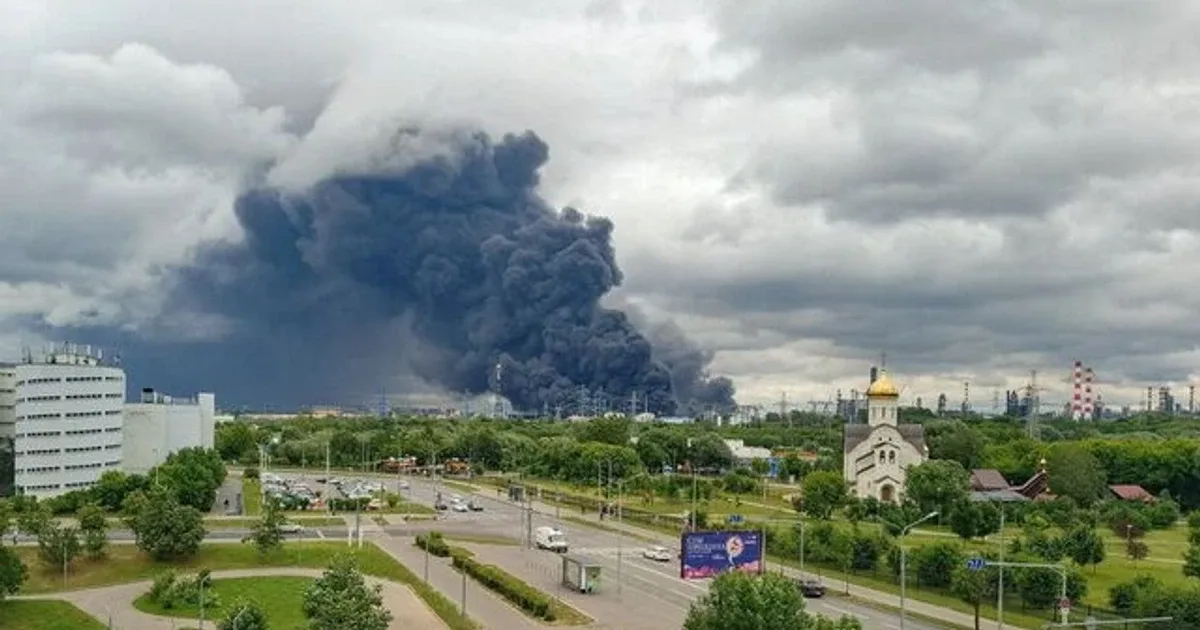
A Ukrainian drone attack targeted the Gazprom Neft Moscow Oil Refinery for the second time in three days, igniting a large fire and producing thick black smoke visible across the city. The strike occurred within the Moscow Ring Road, less than 20 kilometers from the Kremlin, highlighting a critical breach of the capital’s air defenses and exposing the city’s wartime vulnerabilities.
Authorities responded by suspending flights at all major Moscow airports and evacuating Sheremetyevo Airport as the blaze and security concerns spread beyond the refinery grounds. Traffic in the affected district was also halted, underscoring how an attack on energy infrastructure rapidly affects civilian transportation and urban life.

The Kapotnya refinery, established in 1938, supplies roughly 40% of Moscow’s fuel and about 70% of the gasoline consumed in Moscow and surrounding areas. Industry sources said the previous strike, which occurred two days earlier, damaged the refinery’s main processing unit responsible for over half of its capacity. This latest attack further disrupts operations at a facility that handles an estimated 11 to 12 million tons of crude annually.
Repeated strikes on such a critical energy node illustrate Ukraine’s strategy to undermine Russia’s logistical and economic support for its war effort. By targeting refineries near Moscow, Kyiv aims to pressure fuel supplies, weaken revenue streams, and deliver a message that the conflict has reached the heart of Russia, not just front-line zones.
The timing coincided with a recent G7 summit where leaders vowed to intensify economic sanctions on Russia, while Ukrainian President Volodymyr Zelenskiy sought increased backing from Western powers. The Kremlin faces growing challenges in defending its capital and maintaining the narrative of security within its borders amid these incursions.