

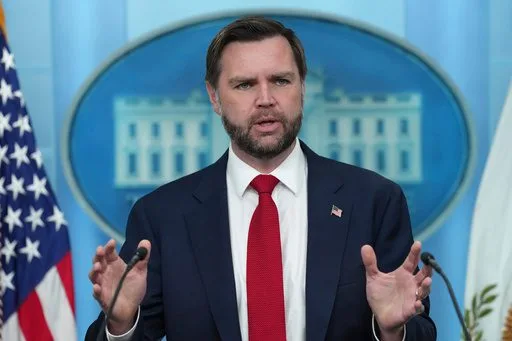
The White House announced a delay in Vice President JD Vance’s planned trip to Switzerland, where he was to head fresh talks with Iran concerning its nuclear program. Although the delegation was prepared to depart, logistical difficulties have pushed back the timeline, increasing uncertainty around the fragile negotiations.
This postponement follows reports that Iran has delayed dispatching its delegation to Switzerland, a move linked to Israel’s ongoing military operations in Lebanon. The strained geopolitical environment complicates efforts to revive diplomatic progress on the nuclear issue.

Recently, the US lifted its blockade on the Strait of Hormuz, a key oil transit route that had been restricted for months. Despite this development easing regional tensions somewhat, the nuclear agreement has faced criticism at home. Some US lawmakers, particularly Republicans, have expressed worries that Washington conceded too much by offering sanction relief and potentially unlocking a large reconstruction fund for Iran.
Earlier, Vance publicly defended the deal, emphasizing a conditional approach to economic relief. He made clear that as Iran improves compliance with US demands, sanctions relief would increase, but any regression in behavior could reverse those benefits. This stance aims to balance concerns about enabling Iran with efforts to incentivize its adherence to the agreement.
Compounding the diplomatic complexity, a senior envoy from the previous Trump administration briefed lawmakers privately, confirming that Iran intends to invite the United Nations nuclear watchdog to inspect its sites. This would represent a significant step in transparency under international oversight.
Meanwhile, Iranian Supreme Leader Ayatollah Mojtaba Khamenei’s cautiously supportive statements about direct negotiations mark a notable shift. His remarks suggested that future talks would not imply succumbing to adversaries but rather pursuing Iran’s interests firmly. This contrasts with the harsher stance historically favored by hard-liners, including Khamenei’s father, who opposed negotiations after the US withdrew from the 2015 nuclear agreement.
Khamenei has not appeared publicly since suffering injuries early in the current regional conflict, which adds an additional layer of uncertainty to Iran’s official posture. The deal includes provisions requiring Iran to dilute its stockpile of highly enriched uranium under international supervision and reaffirms its commitment not to develop nuclear weapons—obligations Iran has previously accepted.
The delay of Vance’s trip and Iran’s tactical pause complicate efforts to stabilize a nuclear accord that faces skepticism both in the region and within US political circles. The coming weeks will be crucial to determine whether negotiations can resume effectively amid unfolding regional developments.