

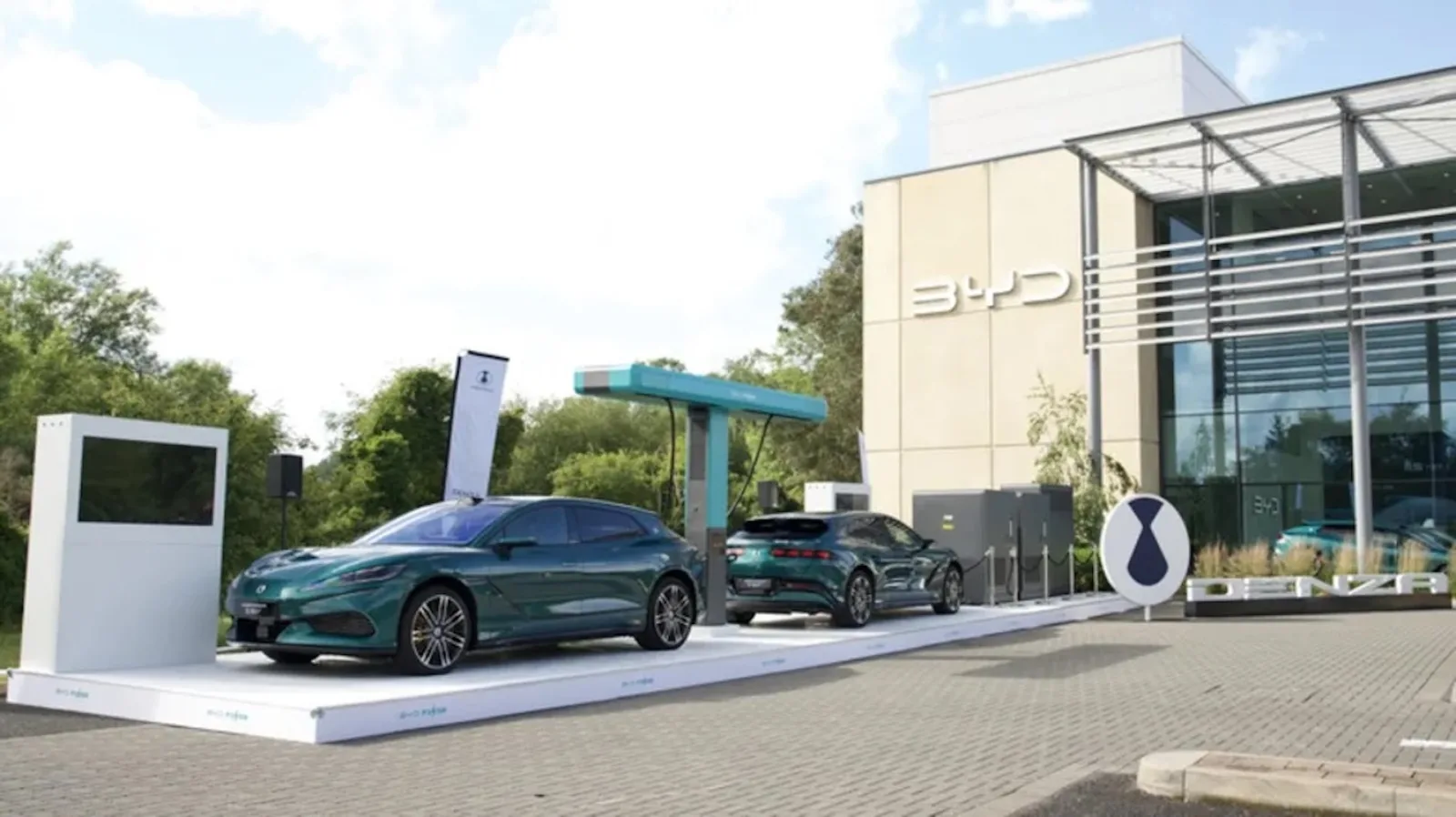
Canadian electric vehicle drivers could soon experience charging speeds that dramatically reduce wait times, as BYD explores launching its advanced Flash Charging system across the country. The company’s ultrafast chargers can reportedly add several hundred miles of range in roughly five minutes—transforming EV stops from lengthy waits into brief breaks.
A recent job posting by BYD North America for a Flash Charging Business Development Manager based in Toronto signals the company’s intentions to build out a flash charging network in Canada. This role will oversee the development, optimization, and expansion of the charging infrastructure to support BYD's strategy within the Canadian market.

This move coincides with Canada's adjustment to tariff policies, allowing approximately 49,000 Chinese-made EVs annually to enter at a reduced 6.1% tariff. This opening benefits automakers like BYD, Geely, and Chery, making Canada more accessible for Chinese electric vehicle manufacturers.
BYD’s Flash Charging system stands out with a power output capacity of up to 1,500 kilowatts—significantly higher than the roughly 350-kilowatt maximum offered by the fastest public chargers currently available in North America. At this rate, the chargers can recharge a battery from 10% to 70% in about five minutes, potentially adding more than 250 miles of range during a short stop.
In China, BYD has already deployed more than 4,200 Flash Charging stations and aims to expand to 20,000 by the end of 2026 before expanding globally. The system integrates large battery storage units akin to oversized power banks, which absorb energy demand spikes and reduce strain on local electric grids. This feature could prove especially important in Canada’s cold climate, where energy loads fluctuate more intensely.
During internal testing on a Denza Z9 GT equipped with BYD's second-generation Blade battery, the vehicle charged from 20% to 97% in just 12 minutes despite the battery being frozen to minus 22 degrees Fahrenheit (minus 30 degrees Celsius). This resilience suggests the technology could maintain charging efficiency even in severe winter conditions.