

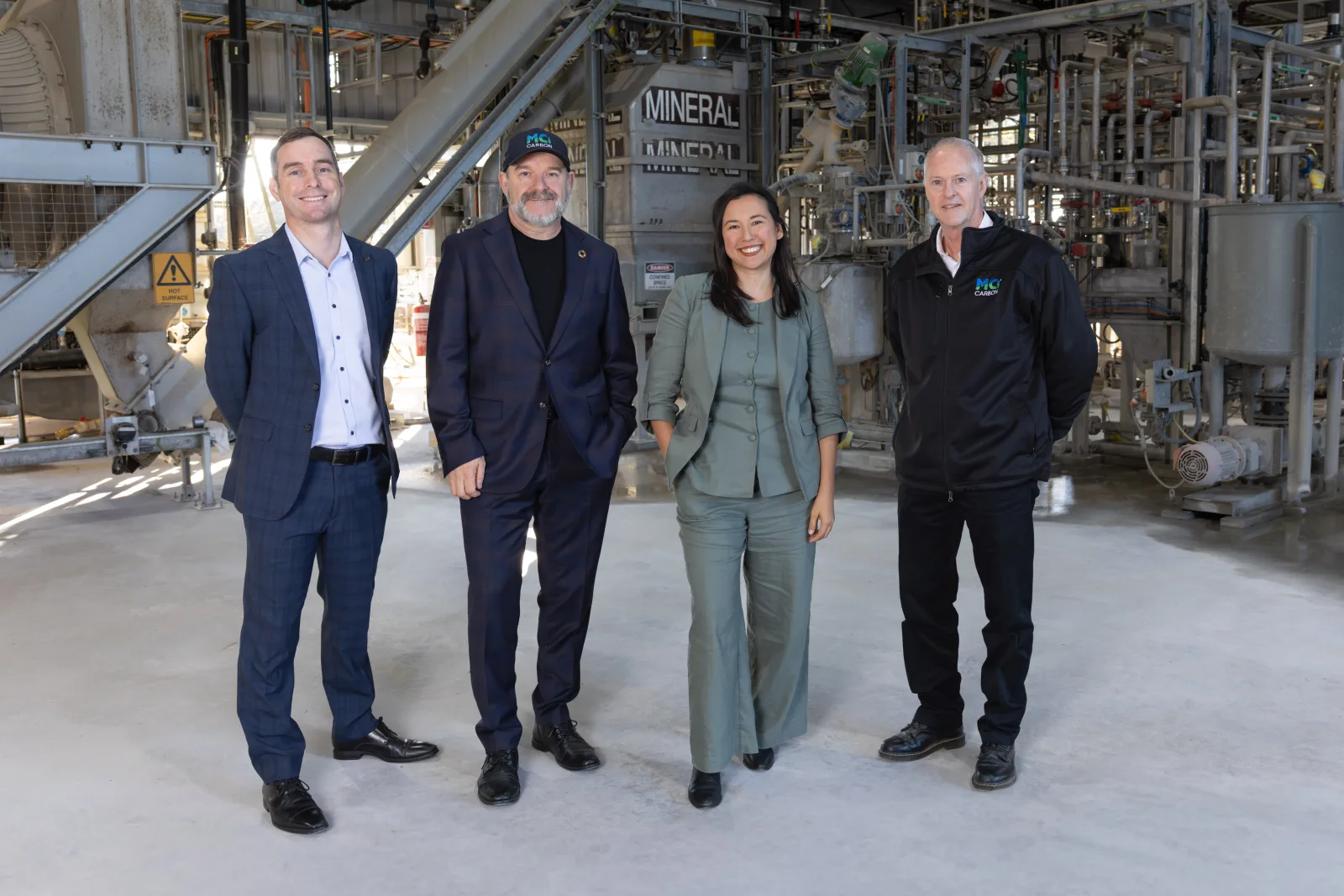
MCi Carbon officially opened its Myrtle plant in Newcastle, marking a significant step toward its vision of capturing vast amounts of carbon dioxide and transforming it into sustainable building materials. This facility will serve as a demonstration site where potential customers can test how the startup’s technology converts emitted CO2 into products like bricks, glass, and cement components, helping reduce industrial carbon footprints.
The company aims to raise US$50 million in capital this year to fund the construction of additional plants closer to client operations. This strategy allows for direct capture of carbon emissions at industrial sites and expedites delivery of the recycled building products. While this capital raise is substantial, MCi Carbon’s leadership stresses that its long-term objective will require investments totaling around US$10 billion by 2035 to deploy its technology globally and achieve its target of capturing a billion tonnes of carbon by 2040.

Founded in 2013, MCi Carbon has developed proprietary technology that binds captured carbon into quarry rock and other base materials. These enhanced materials then become raw inputs for infrastructure industries, replacing more carbon-intensive alternatives and cutting emissions along the supply chain.
To date, the startup has secured approximately $40 million in funding, primarily from Japanese investors including Mitsubishi UBE Cement Corporation and major banks like Sumitomo Mitsui Trust and Mizuho. Unlike many deep tech companies that seek venture capital, MCi Carbon has deliberately pursued strategic investors who can contribute market access and industry expertise, along with financial support. This approach aims to foster partnerships that integrate the startup’s technology directly into industrial operations rather than solely focusing on short-term equity gains.
MCi Carbon is also in discussions with Australia’s National Reconstruction Fund, a $15 billion government-backed initiative designed to promote advanced manufacturing. Such partnerships could provide additional resources and support for scaling the startup’s innovative carbon capture solutions.
The newly operational Myrtle plant will help MCi Carbon optimize configurations tailored to diverse customers, solidifying its model of co-locating plants near industrial emitters. This setup not only minimizes transportation emissions but also ensures swift turnaround times in repurposing CO2, advancing both economic and environmental goals simultaneously.