

A severe storm fueled by climate change devastated the Batang Toru forest in Sumatra, leading to the deaths of approximately 58 Tapanuli orangutans—nearly 7 percent of the species’ remaining population in the wild. This tragic loss represents a significant setback for one of the world’s rarest great apes, which numbers fewer than 800 individuals across three isolated habitat blocks.
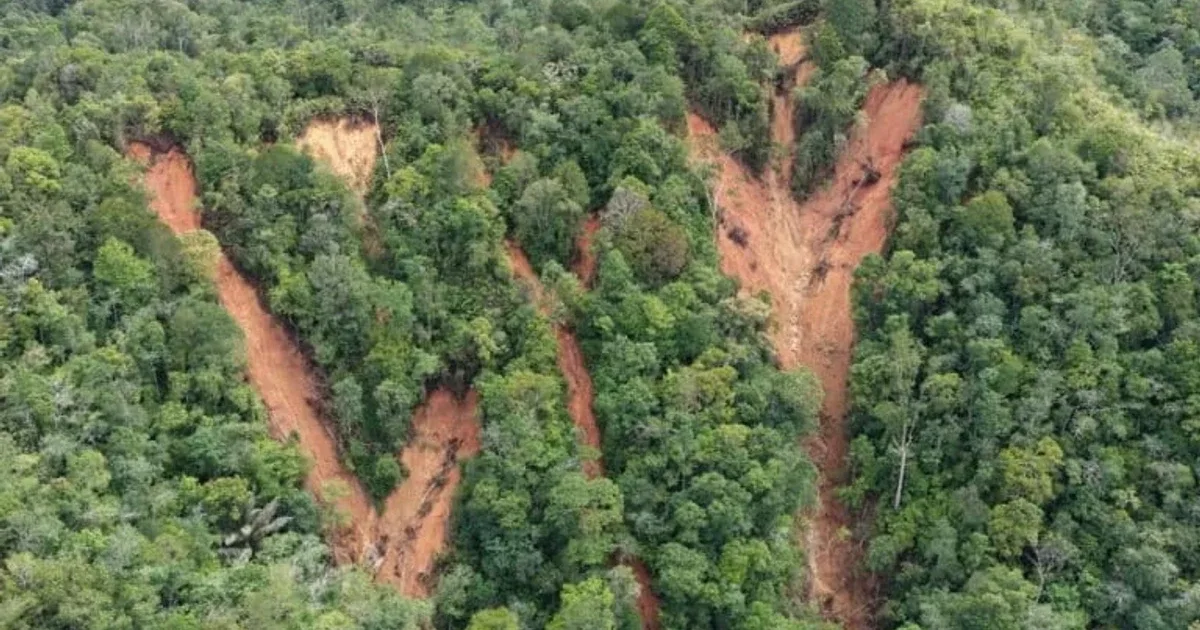
The disaster unfolded in late 2025, when Cyclone Senyar brought record rainfall, triggering landslides that ravaged about 8,300 hectares of forest in the western segment of the Batang Toru Ecosystem. Satellite and population density data combined in a recent study published in Current Biology confirmed these impacts, further revealing that the storm eliminated roughly 11 percent of the orangutans living in the West Block. Prior to this analysis, mortality estimates had ranged lower, but the severity of the event now becomes clearer.

This incident highlights the growing threat that climate change poses to vulnerable wildlife. Researchers determined that human-driven global warming intensified rainfall during the cyclone by up to 50 percent, escalating the likelihood of such extreme landslides. Over a six-day period, more than 1,000 millimeters of precipitation fell across North Sumatra, transforming steep forest slopes into unstable zones where habitat destruction was swift and severe.
The Tapanuli orangutan inhabits three isolated forest blocks—West, East, and South—within Batang Toru. The western block, heavily affected by the storm, is critical since it holds a substantial portion of the population. Conservationists have described the event as an "extinction-level disturbance," underscoring how the combined pressures of habitat loss, climate extremes, and human-wildlife conflict threaten the species’ survival faster than current recovery efforts can manage.
Experts emphasize the urgent need for enhanced protective measures across Batang Toru. This includes halting development that harms habitat, reinforcing ecosystem resilience, and providing sustained financial support for conservation strategies. For the Tapanuli orangutan, a single weather event has eroded years of painstaking progress and narrowed the margin for the species’ continued existence in the wild.