

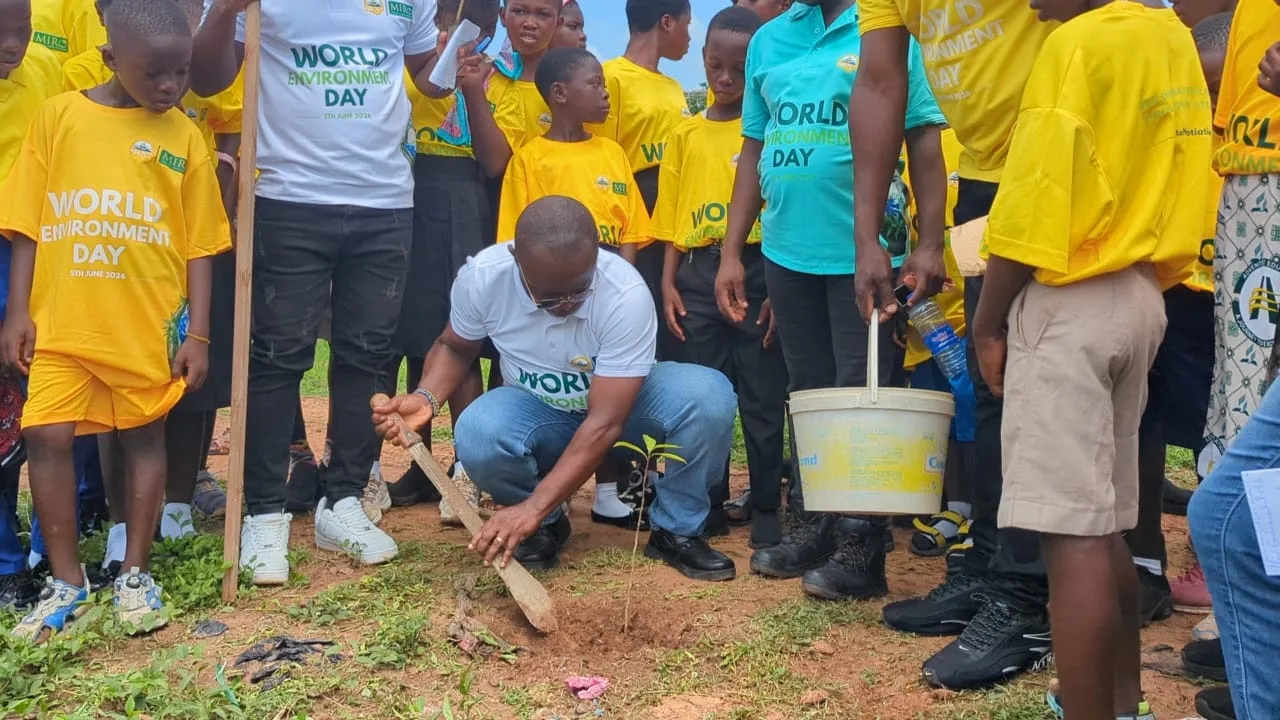
In response to ongoing floods affecting parts of Ghana, the community of Drobonso in the Ashanti region engaged in a tree-planting drive on World Environment Day. This initiative, led by the Environmental Protection Authority (EPA) in collaboration with Miro Forestry, united local leaders, schoolchildren, environmental officials, and residents to address climate change through reforestation and land restoration.
The EPA’s Konongo Area Head highlighted that the frequent floods and extreme weather events observed nationwide underscore the urgency of environmental protection. He emphasized that climate change is no longer a future concern but a present reality adversely impacting social and economic life across Ghana, referencing the severe flooding seen in Accra and other regions this rainy season.

The event focused on raising awareness about climate change’s direct effects on livelihoods and promoting collective stewardship of the environment. It featured the distribution and planting of about 500 seedlings supplied by Miro Forestry in designated district areas. Community members and students were tasked with nurturing these young trees to ensure successful growth and long-term ecological benefits.
This tree-planting exercise is part of a wider strategy to increase tree cover, rehabilitate degraded land, and build stronger community resilience against environmental hazards. Recognizing the multifaceted benefits of trees, the EPA plans to deepen collaboration with district assemblies to enforce environmental regulations, particularly those mandating tree planting in residential developments.
Officials noted that trees significantly contribute to climate mitigation by absorbing carbon dioxide and enhancing air quality. Moreover, they provide natural protections, such as buffering against strong winds and mitigating damage from storms, thereby safeguarding homes and communities from climate-induced risks.
EPA representatives affirmed their commitment to working with local authorities to ensure that environmental by-laws are upheld, especially as urban and residential expansion continues. This partnership aims to embed environmental responsibility within development processes, fostering sustainable land use that prioritizes climate adaptation and disaster risk reduction.