

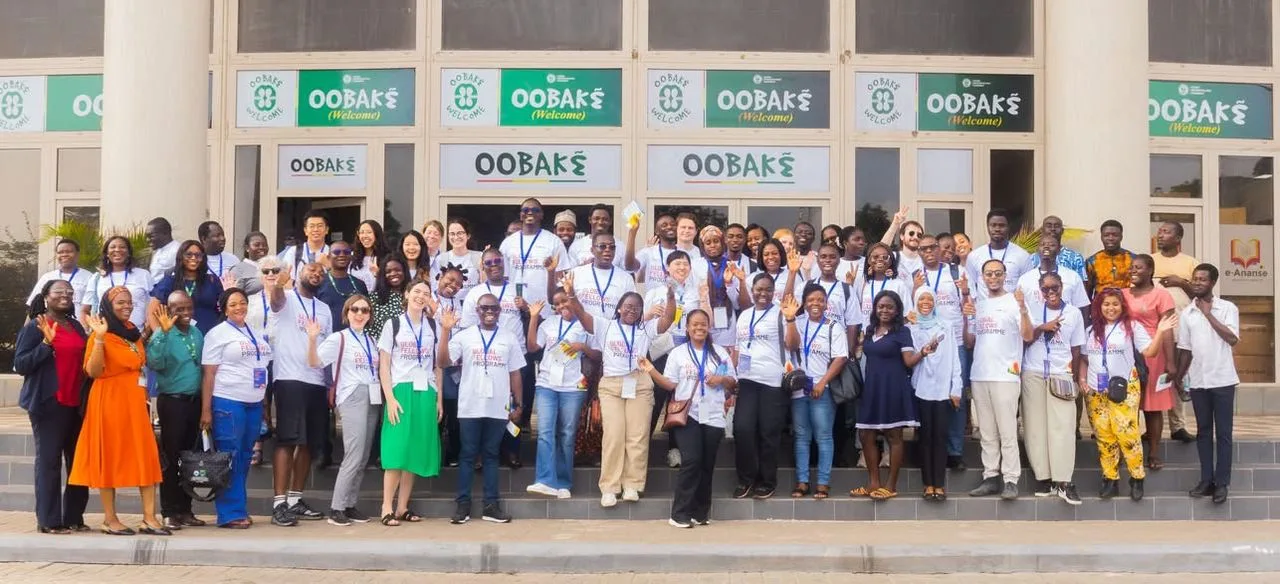
The fourth edition of the Imperial–AIMS Global Fellows Programme (GFP) gathered 40 doctoral researchers from multiple institutions for a focused collaboration on combating extreme urban heat. The event, hosted jointly by the African Institute for Mathematical Sciences (AIMS) Ghana and Imperial College London’s Early Career Researcher Institute (ECRI), ran for five days and concentrated on creating actionable solutions to heat-driven climate challenges in cities.
Participants came from Imperial College London, AIMS Ghana, the University of Ghana, and the University of Health and Allied Sciences (UHAS). They engaged in interdisciplinary workshops aimed at fostering innovation and urban climate resilience. The programme included expert-led discussions on climate science, urban planning, and resilience strategies, involving specialists from various fields to enrich the research and development process.

Field visits to the Accra Metropolitan Assembly provided firsthand experience with urban governance and climate policymaking, while a tour of Kwame Nkrumah Memorial Park linked discussions on leadership and sustainable development. These activities supported the researchers’ understanding of practical challenges and opportunities in urban environments affected by rising temperatures.
Following these engagements, researchers collaborated intensively in teams to design innovative interventions. The culmination involved an accelerator challenge where five teams presented their projects to a panel of experts from AIMS Ghana and Imperial College London.
- Team PUMCLID won the main prize with a project proposing a people-focused early warning system supplemented by solar-powered cooling shelters and a wearable, electricity-free personal cooling device.
- The proposal stressed proactive stakeholder engagement and effective communication to ensure warnings lead to timely protective actions.
- Team MiniForest received the Popular Choice Award for its integrated approach to natural shading and heat mitigation in urban spaces.
This collaborative programme highlighted the importance of interdisciplinary innovation and partnership-building in addressing complex climate issues confronting rapidly urbanizing African cities and beyond. The focus on scalable, community-oriented technologies aims to strengthen resilience and safeguard public health as global temperatures rise.