

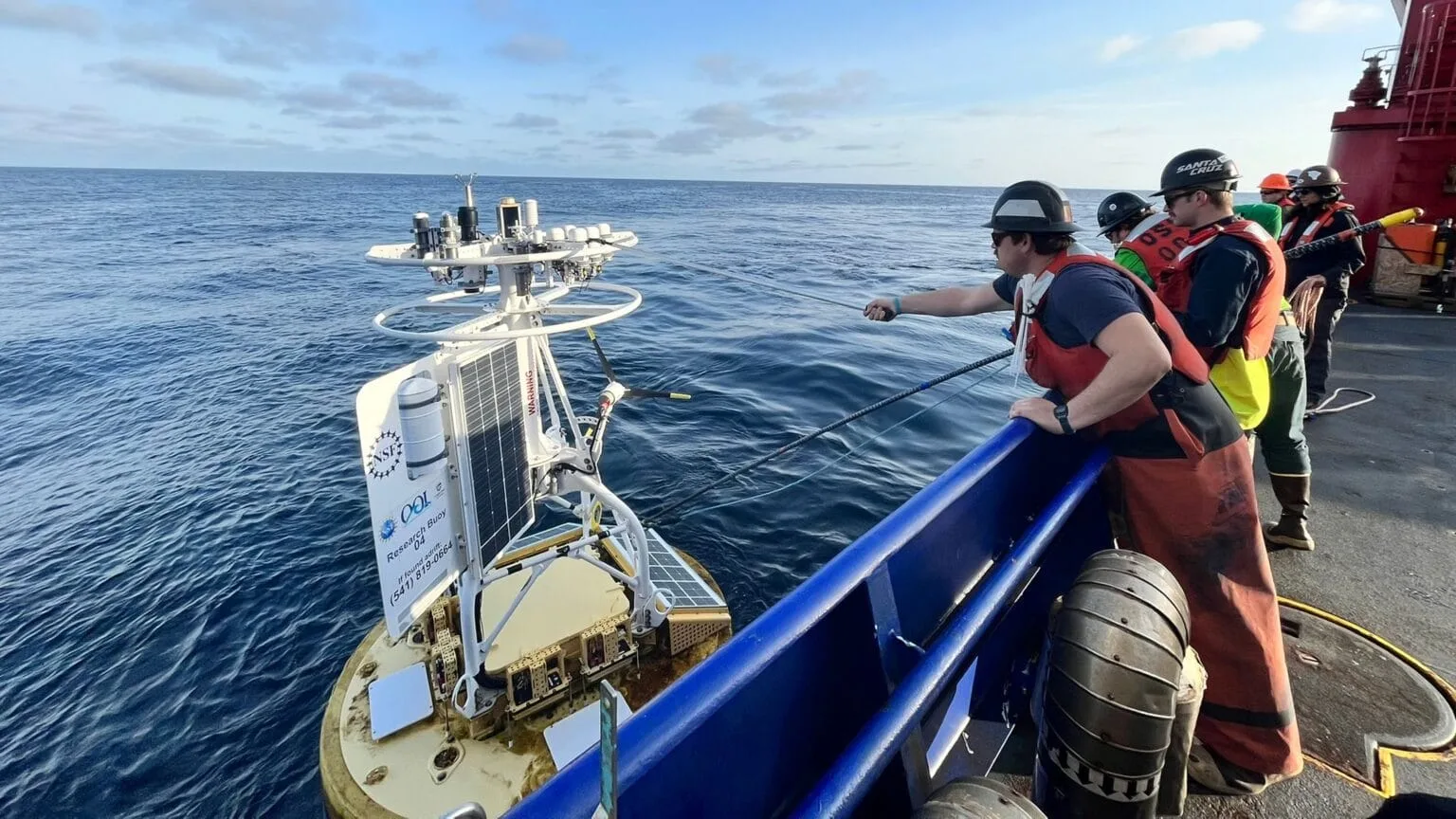
The Senate unanimously passed a measure preventing the National Science Foundation from removing an essential deep-sea observation network that monitors ocean and climate changes off the coasts of Alaska, Washington, Oregon, North Carolina, and the Irminger Sea. This reversal follows a planned shutdown under the previous administration, which would have dismantled longstanding equipment gathering critical environmental data.
One of the most significant sites, Ocean Station Papa, located more than 2.5 miles below sea level in the Gulf of Alaska, will remain in place. It provides one of the longest continuous data streams in the North Pacific, enabling scientists to track marine heatwaves, ocean acidification, and fluctuations affecting fisheries. The site was scheduled for removal next year but now will continue contributing to climate and marine science.

Senators Lisa Murkowski of Alaska and Jeff Merkley of Oregon championed the legislation to maintain the observatories. Murkowski emphasized on the Senate floor the importance of the system, especially amid concerns over phenomena like El Niño and extreme weather, stressing that the timing was not right to lose such an invaluable scientific resource.
These observatories are part of the Ocean Observatories Initiative (OOI), a national network that includes five stations delivering uninterrupted real-time ocean data. Unlike satellite measurements, these stations collect information throughout the ocean water column, offering insights into biologically rich environments inaccessible by other means.
Debbie Kelley, a University of Washington oceanographer who oversees the underwater cable segment of the OOI on the West Coast, highlighted the network's value for hundreds of researchers monitoring ocean health and climate impacts. She noted, however, that several uncabled moorings along the Oregon and Washington coasts have already been removed, including the last one extracted recently, signaling partial disruption before the Senate intervention.
The National Science Foundation announced it is developing plans to service and redeploy the pulled equipment. The continuation of this project is vital to managing fisheries sustainably and understanding rapid environmental changes in critical ocean regions.