

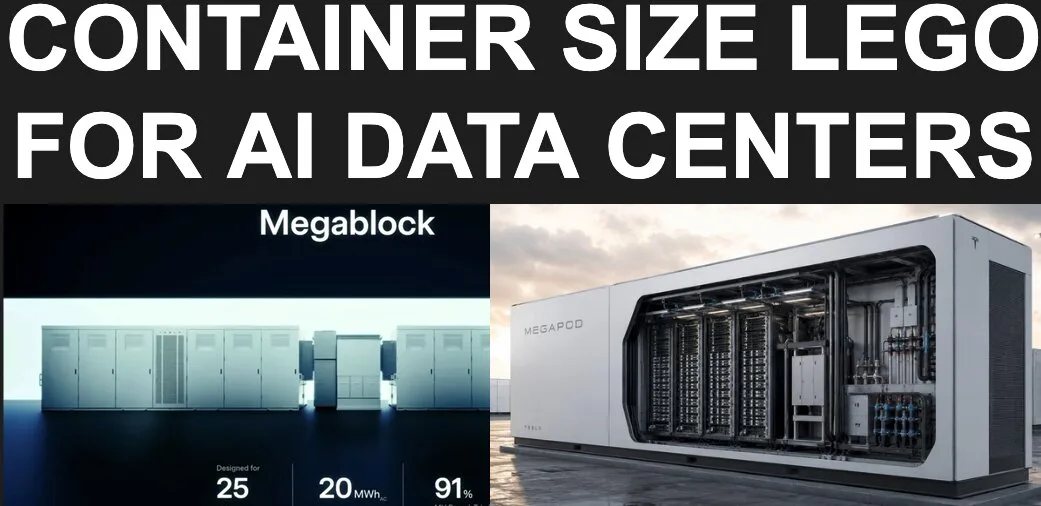
Tesla and SpaceX are exploring innovative energy strategies to unlock as much as 100 gigawatts of power capacity for artificial intelligence data centers by leveraging modular power units and advanced grid management. This approach focuses on flexible energy demand during peak load hours and the integration of virtual power plants to maximize efficiency and capacity on the existing U.S. power grid.
Research indicates that managing energy demand flexibly across just three peak hours could increase available power by about 20%. By curtailing a small fraction—approximately 0.5 to 1 percent—of annual energy usage, the U.S. grid could support tens of gigawatts of new load, unlocking an estimated 76 to 100 GW of power for expanding AI and computing infrastructure.

The plan involves deploying mobile natural gas turbines combined with battery storage systems functioning as virtual power plants. Tesla, SpaceX, and XAI (a related AI company) intend to start with over 10 GW of these modular units and then collaborate with utilities to scale up toward the 100 GW target. Such capacity could support AI data centers with matching chip production and computing power valued at over $50 trillion annually.
At the unit level, individual power modules like a 35 MW installation represent significant economic value—estimated at nearly $1.8 billion each, comparable to recent high-profile AI infrastructure deals. By the end of 2025, SpaceX plans to expand its mobile turbine fleet from 27 to 46 units, adding more than 500 MW of power supply. These turbines, similar in size to a semi-truck, have previously generated revenues around $20 billion per year through rentals.
Additional orders from AI-focused entities like XAI include five Doosan turbines totaling nearly 1.9 GW capacity planned across this year and next. Other turbine models under consideration include SMT130 units rated at 16 MW each and Titan 350 units producing approximately 35 to 38 MW per unit, with cost structures approaching $50 million per MW annually.
The modular approach integrates various scales of power sources, including APR Energy’s 35 MW units and Starship AI’s V3 and V4 models, which deliver 7 MW and 14 MW respectively. Large-scale regional substations, such as a 150 MW TVA facility, demonstrate the multi-billion-dollar economic scale supporting this energy expansion for AI workloads.