

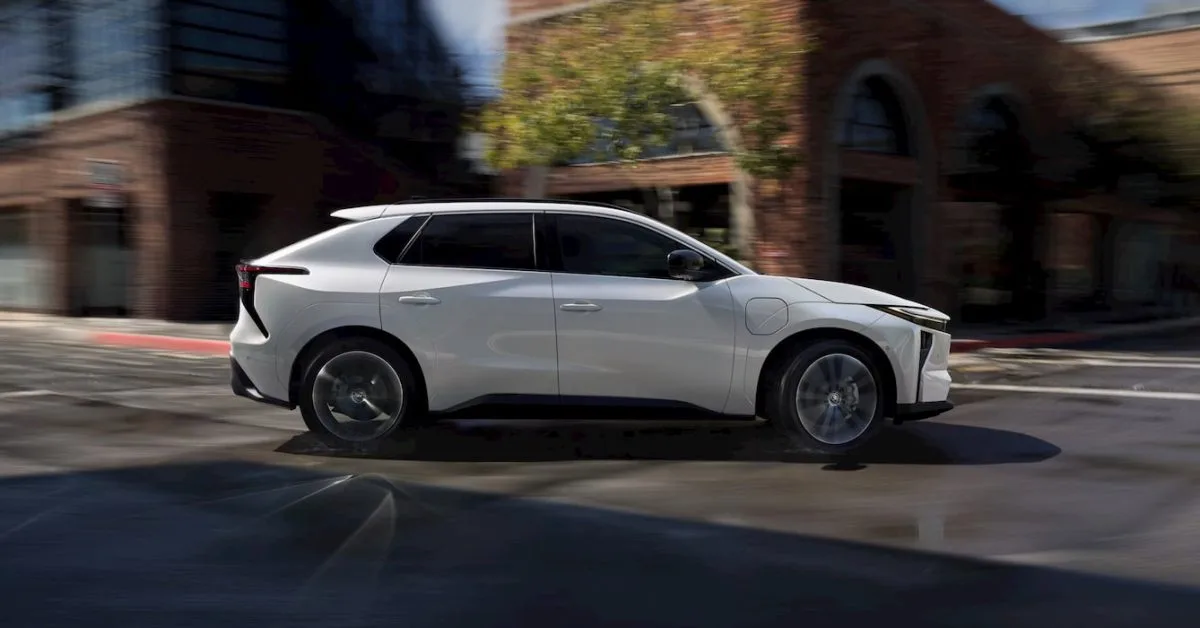
Toyota’s 2026 bZ electric SUV has made a significant impact in the US market, registering more than 17,500 sales in the first half of 2026. This figure not only marks a 90% increase from the previous year but also places the bZ ahead of several established Toyota models, including the Land Cruiser and Sequoia, underscoring the growing demand for Toyota’s electric vehicles.
Introduced late last year, the 2026 bZ offers notable upgrades that have contributed to its success. The vehicle now delivers up to 314 miles of driving range—a 25% improvement over its predecessor—alongside more powerful electric motors and a new battery preconditioning system that optimizes performance. Additionally, the bZ comes standard with a North American Charging Standard (NACS) port, enabling seamless access to Tesla Superchargers without adapters. Starting at around $35,000, it ranks among the most affordable electric SUVs in the US, competing with models like the Chevy Bolt EV, Nissan LEAF, and Hyundai IONIQ 5.

Toyota’s electric SUV lineup continues expanding with the C-HR and the bZ Woodland models, which have recorded solid early sales. Through June, the C-HR sold nearly 3,750 units, while the bZ Woodland reached over 550 units. Lexus, Toyota’s luxury division, also shows rising interest in electric SUVs, with the new RZ model posting sales of nearly 7,800 vehicles in the first half of the year—surpassing sales of Cadillac’s electric SUVs such as the Lyriq and Optiq.
Despite the bZ outselling the Chevy Equinox EV—which saw a 41% sales drop to just over 16,200 units—the Hyundai IONIQ 5 remains the segment leader with sales exceeding 20,000 units during the same period. Toyota plans to broaden its electric portfolio later this year by launching its first three-row electric SUVs: the 2027 Highlander BEV and the Lexus TZ.
Toyota’s commitment to a multi-powertrain strategy remains firm, balancing battery electric vehicles with hybrids and traditional internal combustion engines. Though global vehicle sales dipped recently, Toyota’s pure-electric vehicle sales surged 138% year-over-year, driven by consumer shifts amid rising fuel prices and expanding EV offerings.