

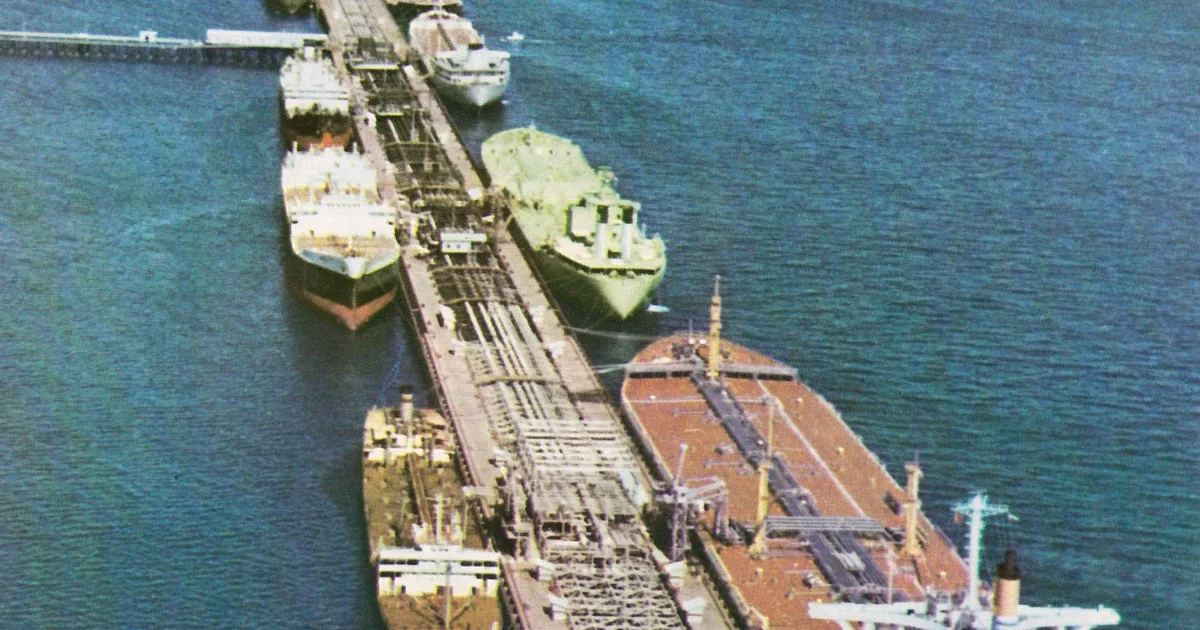
Kharg Island stands at the heart of Iran’s oil export infrastructure, handling most of the country’s crude oil shipments and capable of loading up to 10 supertankers simultaneously. This makes it a vital node in global energy markets, amplifying the significance of recent threats from Donald Trump to seize the island by military means.
Located in the northern Persian Gulf, Kharg Island lies about 34 miles northwest of Bushehr. It benefits from natural freshwater resources, which historically supported its role as a trading post before evolving into Iran’s chief oil-export facility. According to the U.S. Energy Information Administration, Kharg’s terminal includes a main oil-loading facility and a four-berth sea island, three of which are currently operational. Encyclopaedia Britannica estimates the terminal’s capacity at nearly 7 million barrels of crude oil per day.

The island’s strategic importance has long drawn military attention. During the Iran-Iraq War’s maritime Tanker War phase in the mid-1980s, Kharg Island was a frequent target of attacks, reflecting its critical role in Iran’s economy. While previous U.S. strikes avoided Kharg’s oil infrastructure to limit escalation, the area remains a flashpoint, underscoring its vulnerability in any conflict scenario.
Kharg’s significance extends beyond Iran. The nearby Strait of Hormuz channels around 20 million barrels of petroleum daily, representing about one-fifth of global liquid fuel consumption. Any disruption at Kharg could thus ripple through international markets, influencing tanker security, shipping insurance, and energy prices worldwide.
Efforts by Iran to bypass reliance on Kharg include the Goreh-Jask pipeline and the Jask export terminal on the Gulf of Oman, which started limited operations in 2021. However, this alternative’s export capacity—around 300,000 barrels per day—is far lower than Kharg’s, leaving the island as the central outlet for Iranian crude.
Compounding the pressure on Iran’s oil export system are U.S. sanctions reimposed after its withdrawal from the JCPOA agreement in 2018. These sanctions dramatically reduced Iran’s crude and condensate exports to below half a million barrels per day during 2019 and 2020. Despite this, Iran remains the fourth-largest crude oil producer in OPEC as of 2023, underscoring the resilience of its petroleum sector amidst ongoing geopolitical challenges.