

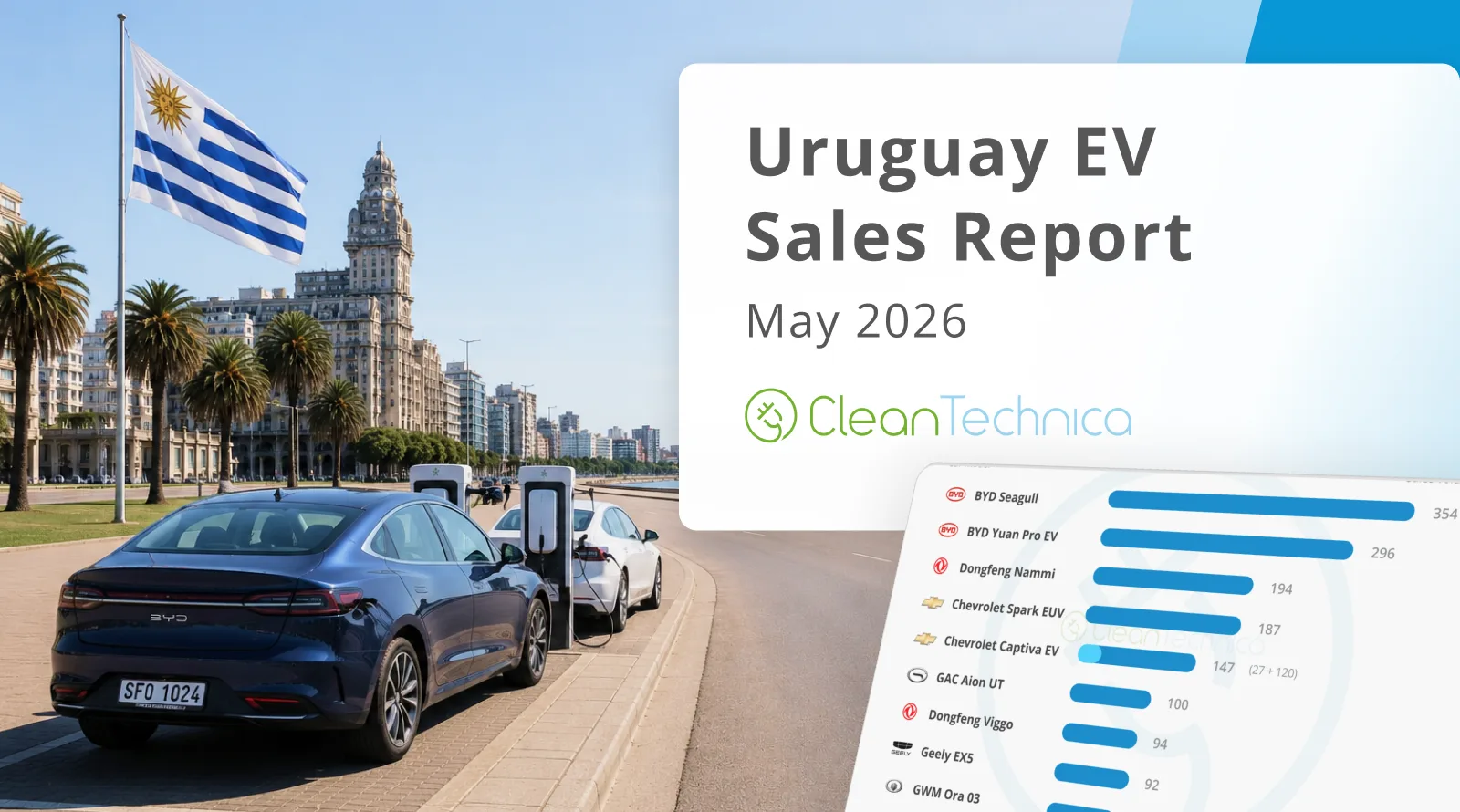
Uruguay is rapidly shifting its automotive market toward electric vehicles, with battery electric vehicles (BEVs) representing a remarkable 41% share of total sales in May 2026. This milestone highlights the country’s growth as a regional leader in Latin America’s electric vehicle transition, outpacing previous frontrunners like Costa Rica.
The surge in EV sales comes amid a broader expansion of the vehicle market, which experienced an annual increase exceeding 20%. Despite this growth, sales of traditional internal combustion engine vehicles (ICEVs) and hybrid electric vehicles (HEVs) declined by 15% in the same period, signaling a definitive shift away from fossil fuel-powered cars. If this trend persists, combustion engine sales may drop more than 50% by the end of the decade.

From a monthly perspective, Uruguay’s EV market hit record highs with nearly 2,900 new electric vehicles sold in May. These figures include BEVs and plug-in hybrid electric vehicles (PHEVs), although the latter remain a small fraction of the total—PHEVs accounted for just over 200 units compared to nearly 2,700 BEVs sold that month.
In terms of market share growth throughout 2026, BEVs surpassed 30% in January, climbed to 33% in April, and then surged to over 41% in May. Combined with PHEVs, the plug-in market share now hovers close to 50%, placing Uruguay alongside the global leaders in EV adoption.
The competitive landscape has also evolved. While BYD continues to lead the market, its dominance has diminished from controlling 70% of Uruguayan EV sales in 2024 to 27% in May 2026. Other brands like Geely and Chevrolet have gained ground, with Chevrolet promoting multiple models including the Baojun Yep Plus, Chevrolet Spark EUV, Wuling Starlight S, and Chevrolet Captiva EV.
Among models, BYD’s Yuan Pro and Seagull remain top sellers but face increasing competition from new entrants. The expanding variety of clean vehicle options appears to be a key driver behind Uruguay’s accelerating shift away from combustion engines, underlining the country’s role as a pioneering market in Latin America’s transition to sustainable transportation.