

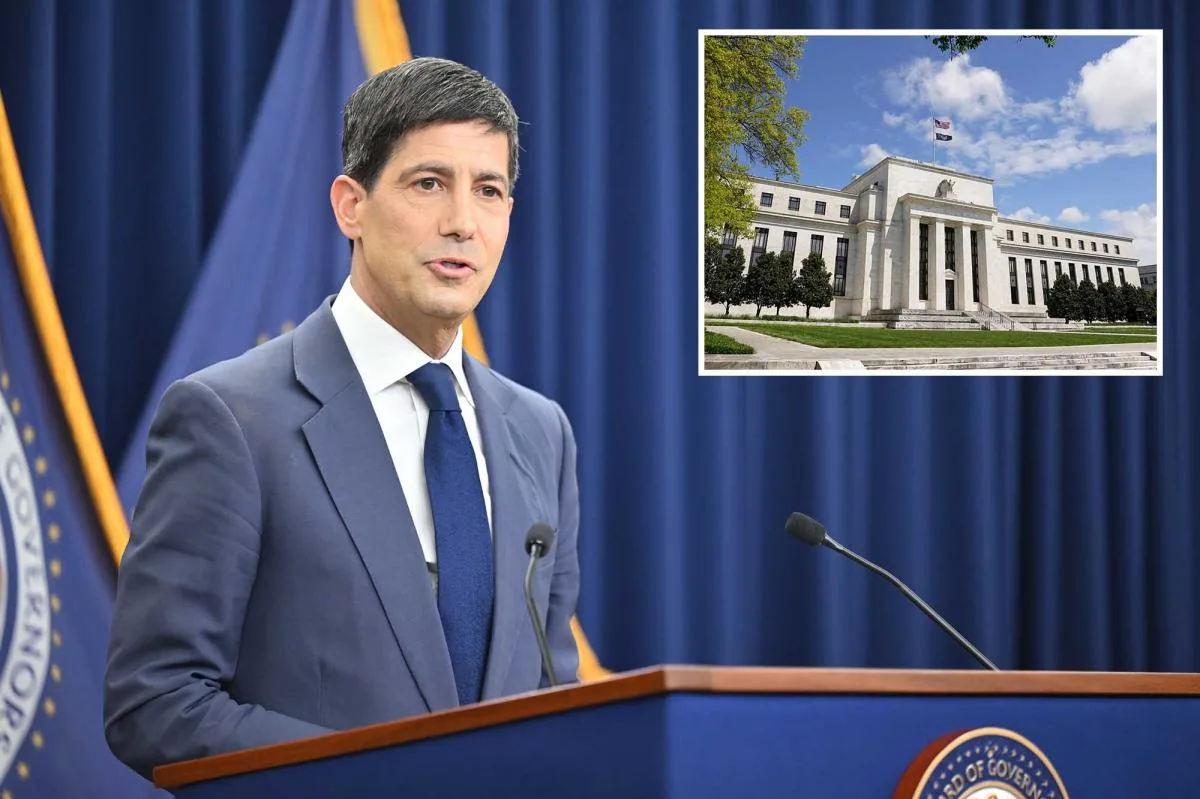
Federal Reserve Chairman Kevin Warsh indicated a decline in inflation risks during his first public remarks since the Fed’s June meeting, signaling cautious optimism about price stability in the United States. Speaking at a European Central Bank conference in Portugal, Warsh emphasized that the inflation threat “has come down” over recent weeks, though he stressed that the central bank still has work ahead to meet its goals.
Despite acknowledging the easing inflation pressures, Warsh declined to offer a clear view on whether the Fed will raise interest rates in the near term. When asked about the necessity of monetary policy adjustments, he highlighted the abundance of new economic data and said decisions would be made after thorough internal deliberations. His approach contrasts with his predecessor’s more vocal forecasts, focusing instead on letting actual data guide market expectations.

This shift in tone comes amid a rapidly changing economic backdrop. Inflation jumped beyond 4% following global energy price spikes due to conflict-related disruptions, while the labor market showed unexpected strength. Additionally, concerns arose that the expansion of artificial intelligence infrastructure might sustain inflation pressures, complicating the Fed’s dual mandate by diverting attention from employment factors.
Warsh reiterated the Fed’s commitment to returning inflation to its 2% target, signaling that any remedy would likely involve rate hikes rather than cuts. Last year, Warsh had criticized central banks for reluctance to lower rates fast enough, but current economic realities have flipped that stance. He underscored that the Fed seeks to maintain price stability without prematurely signaling policy moves.
Market reactions to Warsh’s remarks were measured. Traders increased the probability of a rate hike at the Fed’s upcoming July meeting but still mostly expect rates to remain steady within the current range of 3.5% to 3.75%. The pending June jobs report will be a critical data point, potentially influencing policymakers if employment numbers surpass expectations.
Meanwhile, stock markets showed modest gains following Warsh’s comments, with the Dow Jones picking up slightly and mixed movements seen in major indices. Gold prices edged higher after experiencing a sharp quarterly loss, reflecting investor uncertainty about the Fed’s policy direction.
Warsh dismissed concerns that a less explicit Fed communication strategy would confuse markets, insisting investors respond better to hard data than to forecasts. This signals a more data-dependent, less predictive posture from the Fed amid ongoing global economic volatility.