

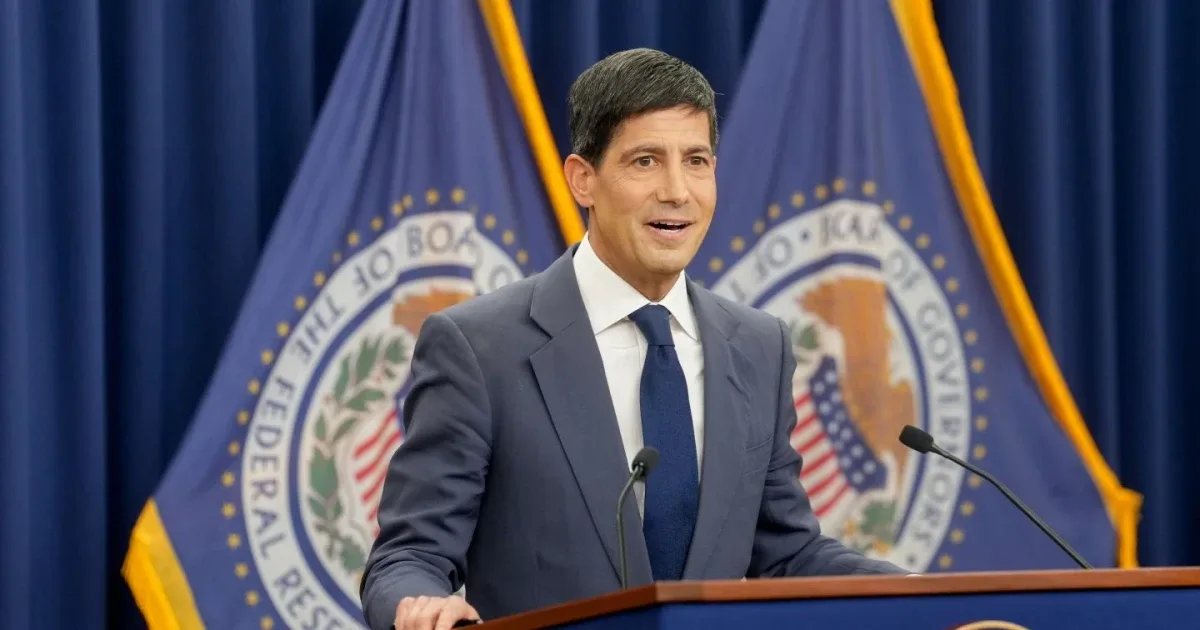
The Federal Reserve decided to hold its benchmark interest rate steady, with the federal funds target range remaining at 3.50% to 3.75% during its latest meeting. This pause marked the first meeting under Kevin Warsh as chair, but the forward guidance signaled that rate increases could still be on the horizon before the year ends.
While the central bank described economic activity as expanding solidly, it emphasized that inflation remains elevated compared to its 2% target, leading policymakers to adopt a cautious stance. In their updated projections, half of the officials anticipated at least one rate hike in 2026. The median forecast for the year-end policy rate rose from 3.4% to 3.8%, reflecting expectations of a tighter monetary policy path.

Financial markets reacted sharply to this cautious outlook. Major stock indices declined, with the Dow Jones Industrial Average dropping nearly 1%, the S&P 500 falling over 1%, and the Nasdaq Composite declining by more than 1%. Simultaneously, U.S. Treasury yields surged, including the two-year Treasury rate reaching its highest level in more than a year, signaling increasing bets on future tightening.
For consumers, this environment maintains pressure on borrowing costs tied to the Fed’s benchmark. Credit card interest, auto loans, and home equity lines remain elevated, and mortgage rates continue to hover above 6%, offering little relief to buyers and refinancers. Higher rates also pose challenges for retirement accounts sensitive to stock market performance and may make corporate credit more expensive, potentially slowing hiring and business expansion.