

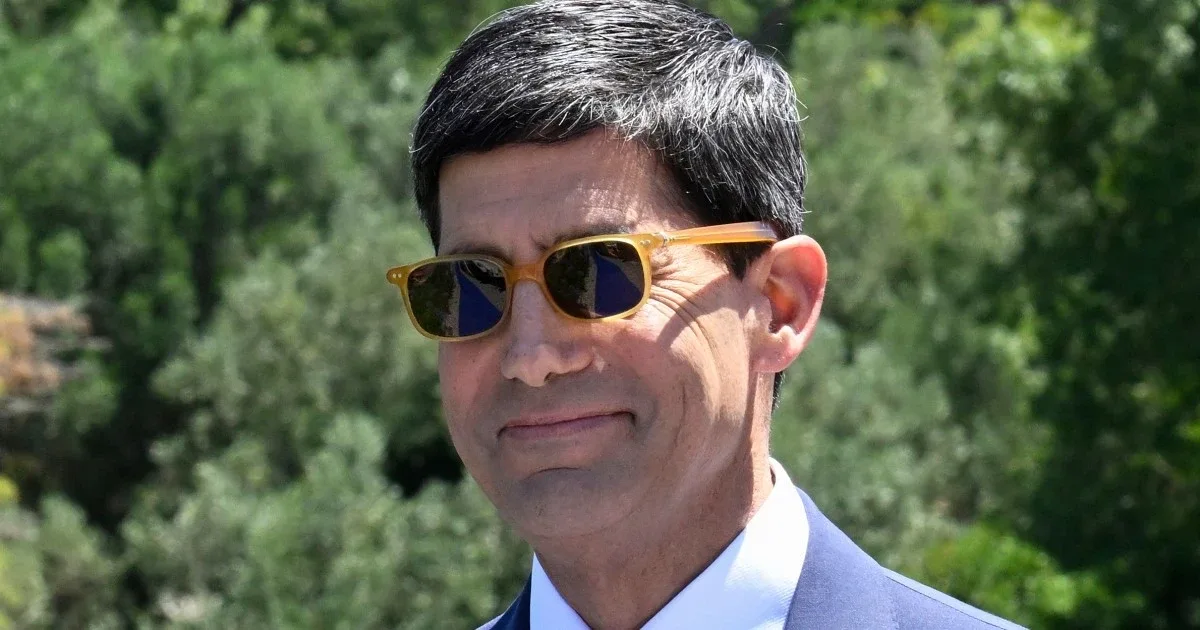
Kevin Warsh acknowledged that inflation risks have diminished somewhat due to lower energy prices, yet he emphasized that the Federal Reserve still faces challenges in reducing overall price levels. Speaking at the European Central Bank’s forum in Sintra, Portugal, Warsh refrained from providing any indication regarding upcoming interest rate decisions, signaling a cautious approach ahead of future Federal Open Market Committee meetings.
Warsh attributed the recent decline in energy costs to a new understanding between the United States and Iran aimed at ending conflict, though he noted that prices remain slightly above levels seen before hostilities began. Despite this improvement, inflation remains stubbornly elevated, with consumer prices showing continued growth. The U.S. Bureau of Labor Statistics recently reported a monthly price increase driven largely by energy, underscoring that inflationary pressures have not yet fully abated.

The Federal Reserve’s benchmark federal funds rate has held steady in the range of 3.5% to 3.75%, a move confirmed at the June Federal Open Market Committee meeting. Warsh reiterated the Fed’s commitment to operational independence amidst external political pressures advocating for rate cuts, signaling that borrowing costs are unlikely to ease in the near term as the central bank focuses on controlling inflation.
Beyond inflation and interest rates, Warsh addressed the economic shifts triggered by artificial intelligence (AI). He characterized the “AI shock” as a catalyst for increased capital investment and expressed confidence that AI will generate new jobs rather than threaten employment. This perspective aligns with his earlier statements before the Senate Banking Committee, where he remarked that the Fed must update its economic models to capture AI’s impact on productivity and labor markets, although timing remains uncertain.
Warsh’s outlook suggests that future inflation battles will hinge not only on traditional factors like wages and hiring but also on energy market developments and expanding capital expenditures, reflecting a nuanced interplay between technology-driven economic changes and longstanding monetary policy goals.