

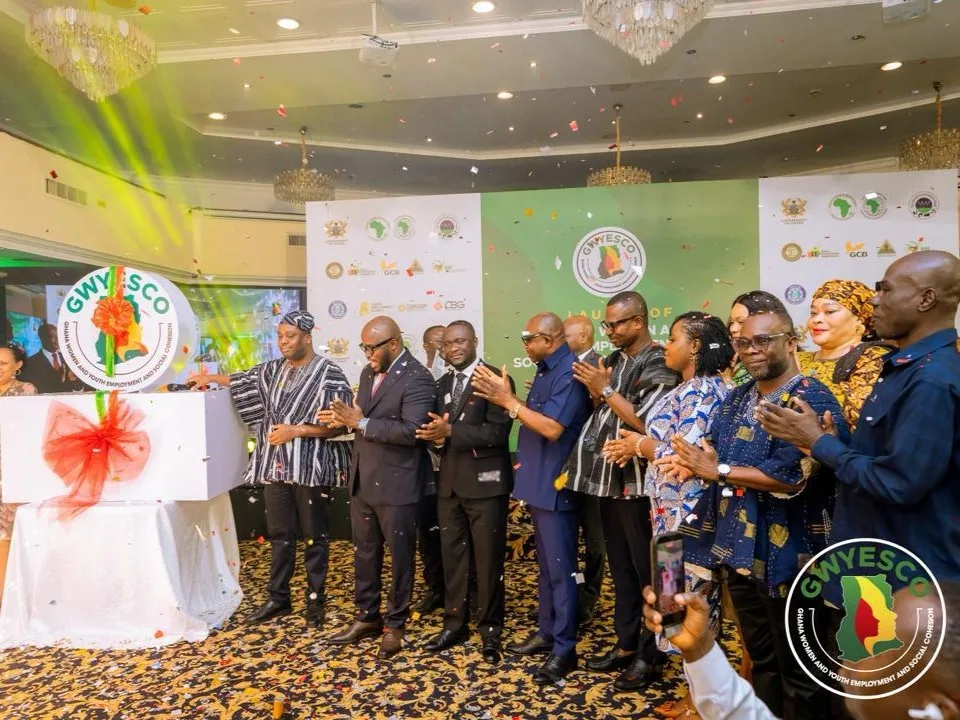
Ghana has rolled out the Ghana Women and Youth Employment and Social Cohesion (GWYESCO) Programme aimed at addressing unemployment among women and young people by generating over 30,000 jobs and economic opportunities nationwide.
The initiative is supported by the African Development Bank (AfDB), with the Ministry of Finance overseeing execution and the Social Investment Fund (SIF) implementing the project. Key figures at the launch included the Deputy Minister for Finance, AfDB’s Country Director, and the CEO of the Social Investment Fund.

GWYESCO targets youth unemployment and women’s economic challenges by equipping beneficiaries with market-relevant skills, improving access to finance, and promoting social cohesion in vulnerable communities. Its approach responds to persistent issues like skill gaps, financial exclusion, and limited entrepreneurial support.
The programme focuses on three main strategies: aligning training with industry demands in sectors such as STEM, digital technology, and agribusiness; expanding financial and business development services for women- and youth-owned micro, small and medium enterprises (MSMEs); and enhancing institutional capacity to ensure effective delivery.
Beneficiaries will undergo training in technical, vocational, and creative skills, while TVET (Technical and Vocational Education and Training) centres will be refurbished, built, and equipped to support these efforts. The programme aims to provide entrepreneurship support and financing access to thousands of MSMEs.
- Train over 28,000 women and youth in STEM, digital, and creative industry skills.
- Support more than 22,000 individuals into wage or self-employment by 2029.
- Provide entrepreneurship and business development services to 10,000 MSMEs.
- Expand financial access to 8,000 women- and youth-owned businesses.
- Construct, renovate, and equip ten TVET centres across the country.
The CEO of the Social Investment Fund emphasized that empowering women and young people with skills and financing is crucial for national progress and social stability. The programme acknowledges unemployment as a critical threat to economic growth in Ghana and Africa, with particular attention on the growing number of youths not engaged in education or employment.