

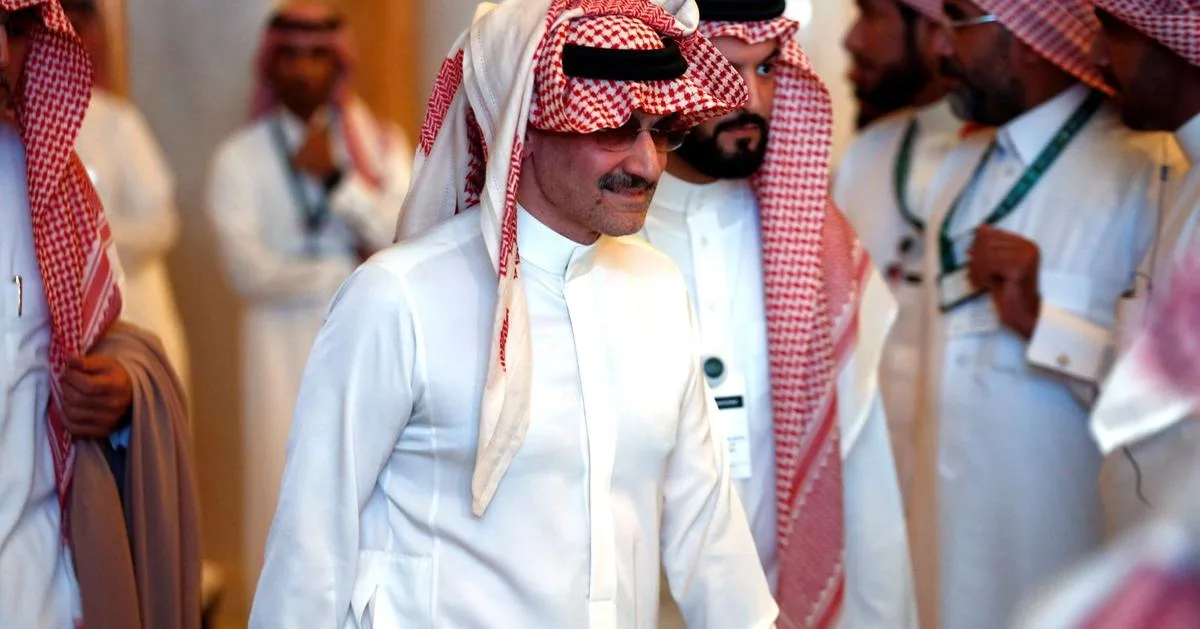
Saudi billionaire Prince Alwaleed bin Talal is widely recognized for his ability to back successful companies like Apple and Amazon. However, his publicly traded firm, Kingdom Holding, has failed to deliver comparable returns since its public listing. The recent buzz around a potential SpaceX IPO has sparked hopes among investors, yet this event alone is unlikely to revive the conglomerate’s long-stagnant stock price.
Following reports that Kingdom Holding and Alwaleed’s personal stake in SpaceX could be valued at over $10 billion if the company goes public at a $1.75 trillion valuation, Kingdom Holding’s shares briefly surged to their highest point in years. However, once the company clarified that its own holding in SpaceX would be worth just over $5.6 billion, separate from the founder’s personal shares, the stock sharply declined, shedding nearly 9% initially and continuing to fall thereafter.

Kingdom Holding’s shares have lagged far behind since its 2007 IPO, hampered first by a massive loss during the global financial crisis that set back the company’s growth. The firm’s diverse asset portfolio, which includes stakes in financial institutions like Citigroup, hospitality brands such as Four Seasons, and various media ventures across continents, has failed to translate into sustained market confidence or stock appreciation.
The company faces a structural challenge: its business model disperses investments across mature, slow-growing industries without enough exposure to faster-moving, innovative sectors. This strategy contrasts sharply with Alwaleed’s storied reputation for spotting transformational companies early, exemplified by his position in SpaceX. Despite his defense of Kingdom Holding’s valuation—claiming the stock trades below its net asset value and deserves a significant premium—the market remains cautious.
Bridging this valuation gap will likely require more than a high-profile IPO. Analysts suggest Kingdom Holding needs a sharper focus on high-growth industries, including technology, artificial intelligence infrastructure, clean energy, and ventures aligned with Saudi Arabia’s Vision 2030 economic reforms. Moving capital more dynamically and shedding legacy financial assets could be critical to reviving investor enthusiasm and capturing the growth trajectory seen in newer sectors.