

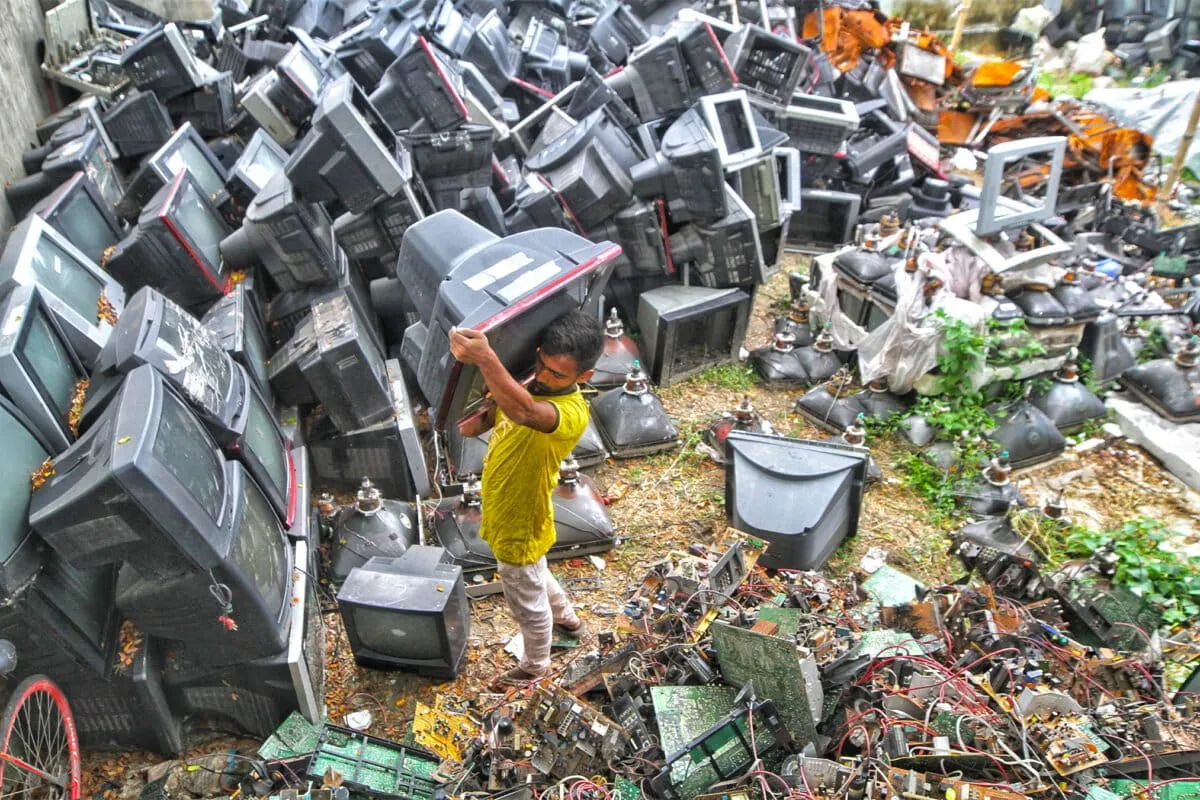
Bangladesh has transformed from an exporter to a net importer of electronic waste, according to recently reviewed customs data and studies. This shift contradicts the country’s obligations as a signatory to the Basel Convention, an international treaty aimed at limiting hazardous waste trade. Between 2022 and 2025, at least 40 companies imported e-waste under the international customs code HS 8549, despite laws intended to control such imports.
The country's Hazardous Waste (E-waste) Management Rules, introduced in 2021, have failed to stem the growing inflow of discarded electronics. Weak enforcement mechanisms, poor monitoring, and limited local recycling capacity continue to encourage illegal imports and the rise of informal e-waste processing sectors. According to data from the National Board of Revenue (NBR), imports of e-waste and scrap reached nearly 15,000 tons, substantially exceeding exports of printed circuit boards and electronic scrap.

Industry sectors involved in importing e-waste include textiles and apparel, responsible for around one quarter of all importers identified in the customs data. While many companies contacted for comment did not respond, Unilever Bangladesh Limited denied involvement in e-waste imports, clarifying that an item they imported was miscoded by customs authorities.
Reports from Transparency International Bangladesh signal that official import figures likely underestimate the true volume due to misclassification and other inconsistencies in customs documentation. Imports under HS 8549—the code specifically for electronic waste—amounted to approximately $700,000, underscoring the economic scale of this trade. These findings raise concerns about the environmental and public health risks posed by unregulated e-waste handling.
Bangladesh’s limited infrastructure to safely recycle or dispose of electronic waste exacerbates the problem, leading to hazardous informal recycling practices that impact vulnerable communities. Strengthening regulatory enforcement and expanding proper recycling facilities are critical to addressing the country’s emerging status as a net e-waste importer.