

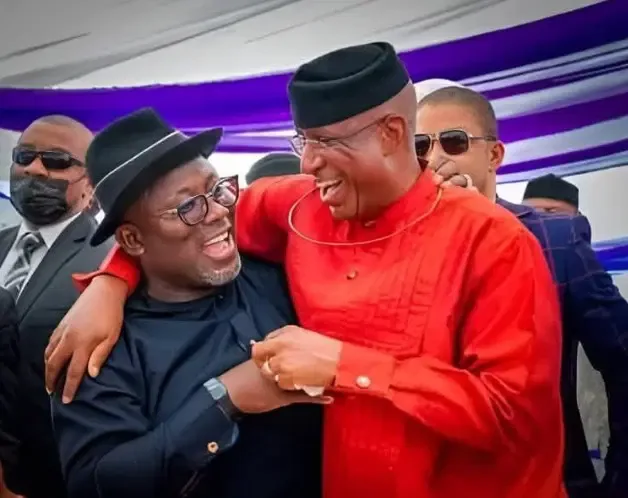
The political tension in Delta State has escalated sharply between Governor Sheriff Oborevwori and Senator Ovie Omo-Agege, as both leaders exchange pointed accusations amid shifting party loyalties and disrupted power-sharing deals. Their rivalry, rooted in the contested 2023 gubernatorial race, has resurfaced with renewed intensity during recent media exchanges.
Governor Oborevwori launched the first salvo on national television, dismissing Omo-Agege as politically unreliable and no longer an influential player. He highlighted the senator’s recent loss in the APC senatorial primary and accused him of betraying key political figures who helped shape his career, including former leaders James Ibori, Great Ogboru, and O’tega Emerhor. Oborevwori portrayed Omo-Agege’s departure from the APC as a poorly coordinated and predetermined move that lacked any meaningful consultation with party authorities.

In a direct counterattack, Senator Omo-Agege accused Governor Oborevwori of abandoning the Peoples Democratic Party (PDP) out of fear of facing him in the 2027 governorship election. He claimed Oborevwori defected to the All Progressives Congress (APC) to avoid a direct contest, branding the move a sign of political cowardice. Omo-Agege also hinted at breaches in the power-sharing agreement attributed to Bola Tinubu’s 60-40 formula, suggesting that Oborevwori’s actions undermined previous consensus arrangements between the parties.
The feud is emblematic of broader realignments within Delta State politics, where defections and shifting alliances continue to reshape the competitive landscape ahead of the next general elections. Both Oborevwori and Omo-Agege remain central figures, wielding influence even as their bitter exchanges highlight deep fractures within their political circles.