

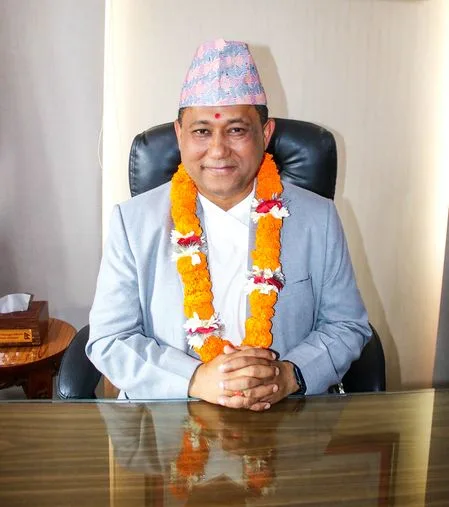
Nepal’s Foreign Minister Shishir Khanal is set to visit China shortly after concluding his trip to India, signaling Kathmandu’s ongoing effort to maintain balanced ties with its two giant neighbors. The visit to Beijing is scheduled to take place in mid-June, with official talks planned for two days before his return.
During his stay in China, Khanal is expected to meet with key Chinese officials, including Foreign Minister Wang Yi and Liu Haixing, the head of the International Department of the Communist Party of China. He will also engage with the Nepali diaspora there, reflecting the broader diplomatic and cultural linkages Nepal maintains with China. Although the Ministry of Foreign Affairs in Nepal has not officially confirmed the itinerary, local media reports suggest the visit will span from June 14 to June 17.

This diplomatic tour comes as Nepal continues to navigate its foreign policy between India and China, two countries that heavily influence the region politically and economically. Nepal’s new government has emphasized adherence to longstanding foreign policy principles focused on national dignity, sovereignty, and mutual benefit. In the recently announced national budget, the government underlined its commitment to strengthening balanced foreign relations and mobilizing soft power to foster economic growth.
Analysts point out that Khanal’s visit will offer Beijing a clearer picture of Nepal’s stance on core Chinese concerns, such as the One-China policy and territorial integrity related to Tibet and Taiwan. A former Nepali ambassador to China highlighted that Beijing favors working with governments that respect these core interests. The visit is also seen as an opportunity to accelerate progress on Belt and Road Initiative (BRI) projects, which have experienced delays in Nepal.
China’s support remains crucial for Nepal’s development, particularly in areas described as the three Cs: connectivity, communication, and climate. Simultaneously, Nepal's strategy involves maintaining an “equal distance and equal proximity” with all countries, avoiding military alliances and conflicts, which it views as threats to global peace.
In practice, Nepal sustains a multifaceted and dynamic relationship with India, sharing deep cultural and religious ties due to their Hindu-majority populations and close geography. Kathmandu seeks to leverage evolving geopolitical shifts to advance its national interests, prioritizing sovereignty and territorial integrity as the foundation of its foreign policy.