

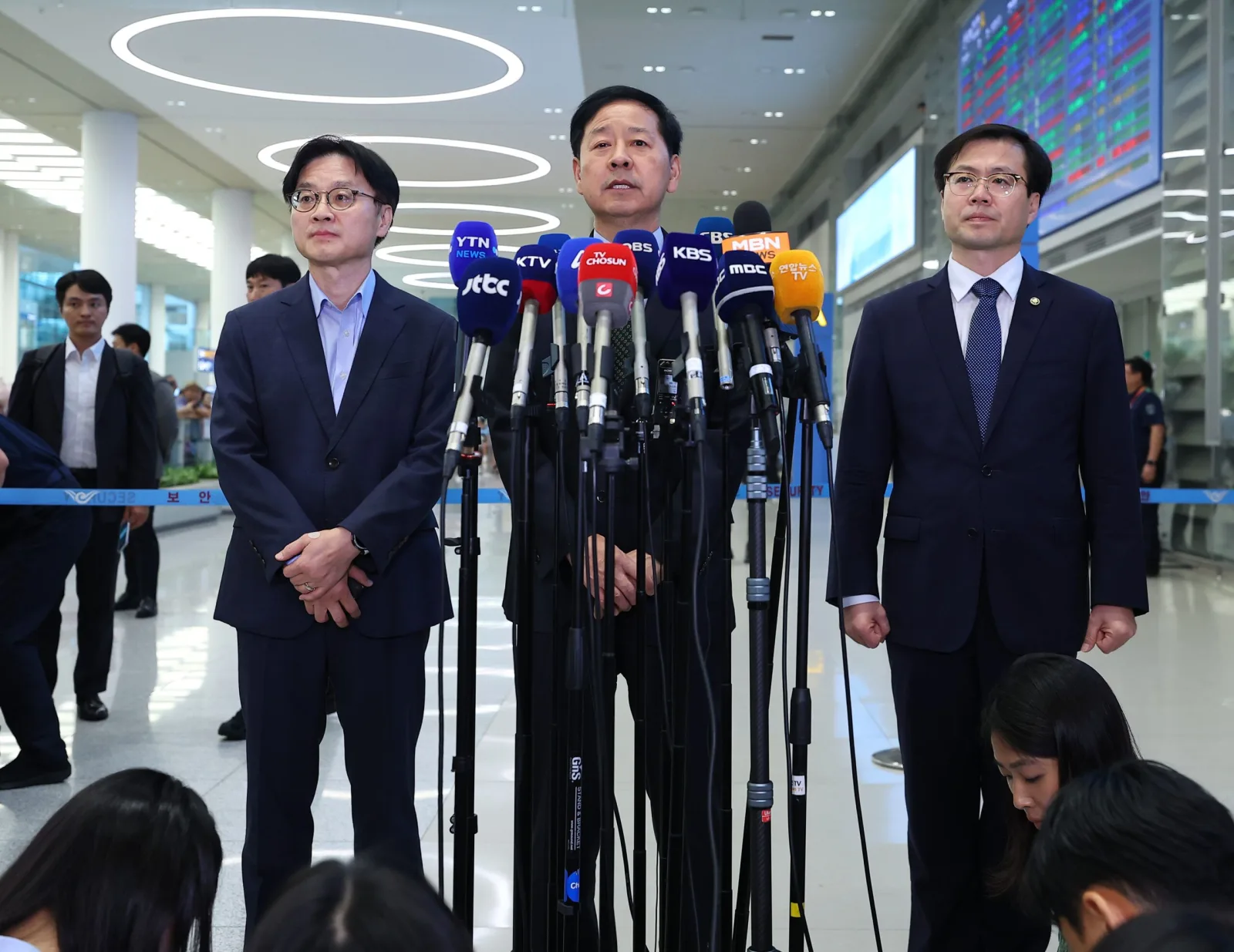
South Korea’s government is positioning itself to leverage new economic prospects stemming from the recent US-Iran memorandum of understanding, while simultaneously preparing to mitigate ongoing risks affecting its economy. The agreement between Washington and Tehran, aimed at reducing conflict, opens avenues for South Korea to engage with Middle Eastern nations on reconstruction and fiscal stabilization projects.
The finance minister emphasized the country’s commitment to enhancing economic security and supply chain resilience. He highlighted that Seoul will actively explore areas for cooperation in the Middle East, viewing reconstruction efforts as an opportunity to deepen strategic partnerships and secure long-term economic benefits.

Amid these developments, South Korea faces pressure from the US regarding proposed tariffs targeting trading partners accused of failing to enforce import bans on goods made with forced labor. The US Trade Representative has considered imposing tariffs ranging from 10 to 12.5 percent on products from numerous countries, including South Korea, which is Asia’s fourth-largest economy. The finance minister assured that South Korea will engage proactively with US authorities to navigate these trade challenges and protect domestic companies from competitive disadvantages.
Although external uncertainties appear to be easing following the US-Iran MOU, the economic fallout from the recent Middle East conflict continues to reverberate. Domestically, South Korea grapples with slower employment growth, rising consumer prices, and volatility in foreign exchange and interest rates. The government plans to actively monitor regional developments to ensure the safe transit of South Korean vessels through strategic points like the Strait of Hormuz, critical for energy supplies.
Efforts are underway to cushion the impact of these uncertainties on citizens’ livelihoods. The finance minister stated that the administration will devote resources to relieve economic burdens caused by inflation and market fluctuations while maintaining vigilance over geopolitical risks.