

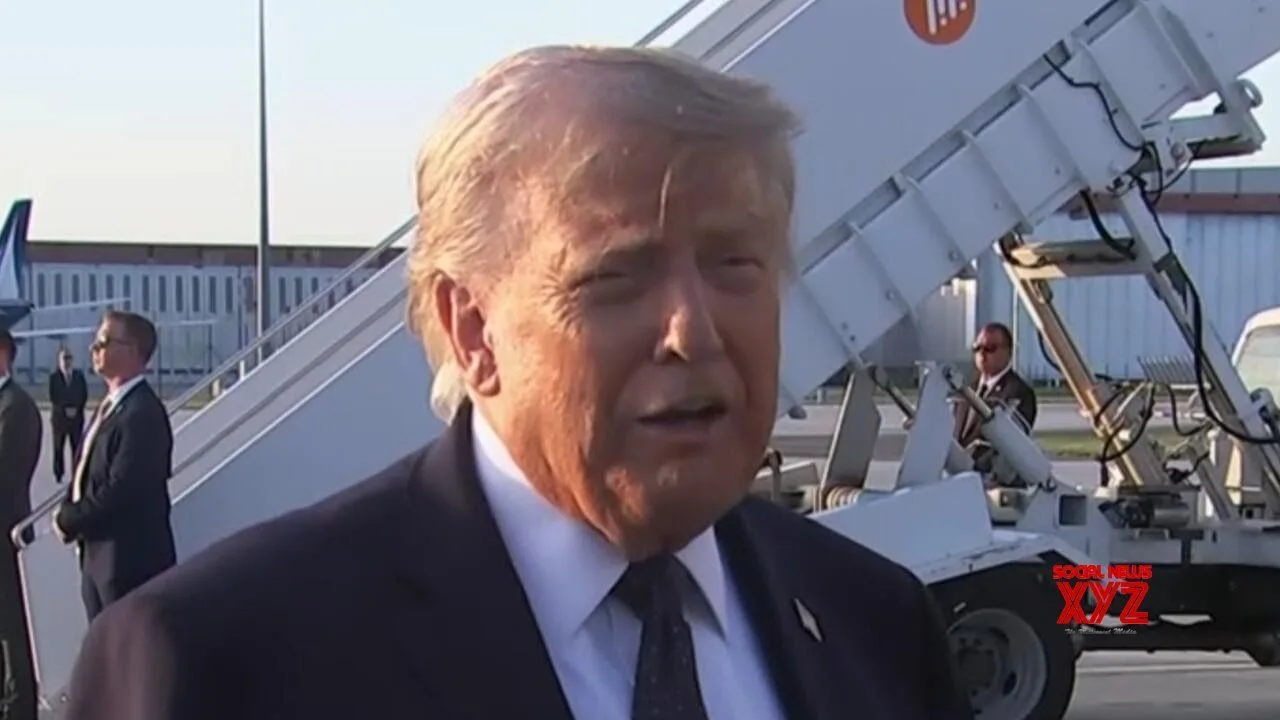
During a press encounter in Paris, President Donald Trump questioned the value of the United States-Mexico-Canada Agreement (USMCA), the trade deal he originally signed during his presidency. He remarked that the country might "do better" if it were not part of the agreement.
Trump’s comments mark a significant departure from his earlier position when he championed the USMCA as a replacement for the North American Free Trade Agreement (NAFTA). The deal aims to modernize trade relationships between the three North American countries by addressing issues such as labor standards, digital trade, and environmental protections.

USMCA has played a pivotal role in shaping trilateral trade since its implementation. It serves as the current framework regulating tariffs, market access, and cross-border commerce for the United States, Mexico, and Canada. The agreement is watched closely by businesses and policy makers who track its impact on manufacturing, agriculture, and services.
Trump’s latest remarks come amid ongoing debates about the efficacy of large-scale trade agreements and their impact on U.S. economic interests. While initially endorsing the deal as a major achievement of his administration, he now signals a preference for alternative trade arrangements or even a withdrawal, reflecting persistent skepticism he has expressed about multilateral deals.
The USMCA remains a cornerstone of North American trade, offering regulatory clarity and dispute resolution mechanisms designed to facilitate commerce and protect certain domestic industries. Its renegotiation and ratification had been hailed as an improvement over NAFTA, addressing some concerns about job losses and unfair trade practices.
Despite Trump’s criticisms, there has been broad support among many economists and trade experts who argue that the USMCA provides stability and modernized rules necessary in a global economy increasingly shaped by digital and environmental considerations.