

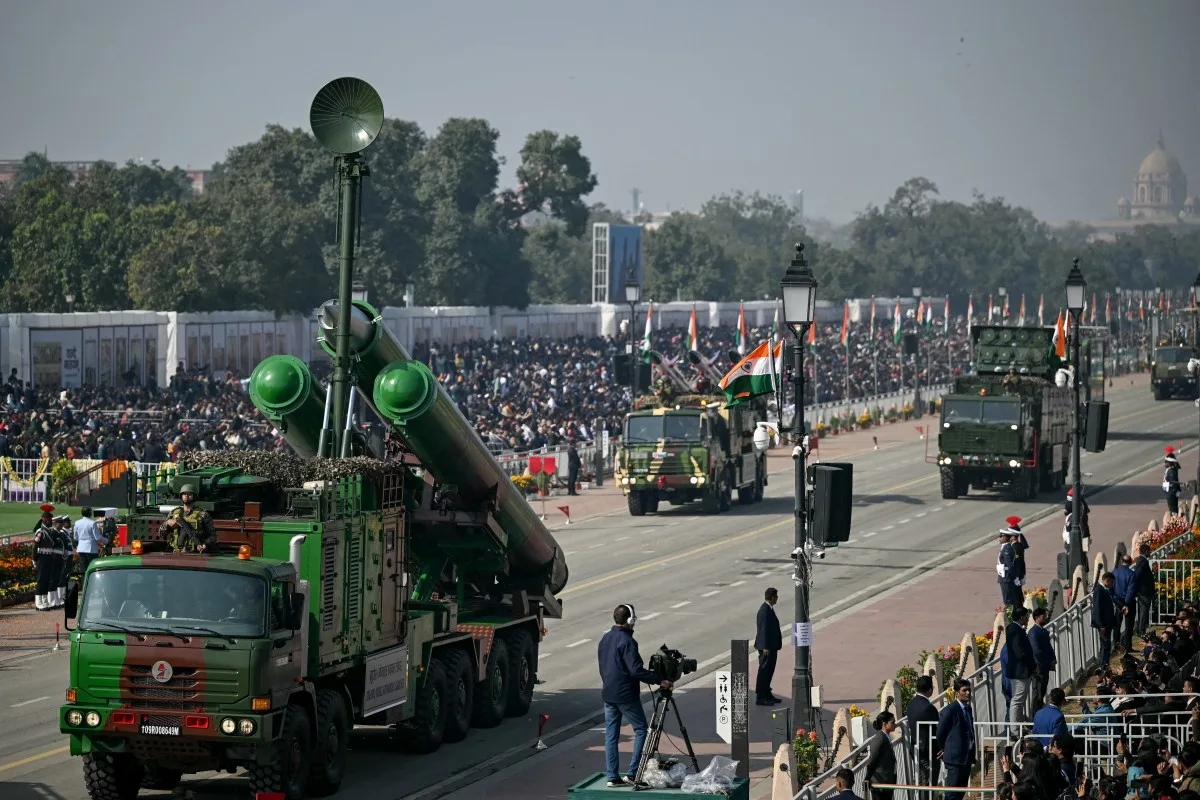
Vietnam is preparing to become the second foreign nation to acquire India’s BrahMos cruise missile, a significant move reflecting ongoing strategic anxieties about China’s military buildup in Asia. This procurement, confirmed by an Indian defense official at a regional security forum, anticipates advancing Vietnam’s coastal defense capabilities amid persistent maritime disputes.
The BrahMos missile, jointly developed by India and Russia, stands out for its supersonic speed and precision, with an operational range of roughly 180 miles. Vietnam aims to deploy a shore-based system that enhances its ability to counter potential naval threats near its coastline, particularly in contested areas of the South China Sea. This defense upgrade follows the Philippines, which earlier became the first foreign user of BrahMos amid its own military modernization efforts spurred by territorial tensions with China.

While China remains Vietnam’s top trade partner and the countries have worked to warm relations, Hanoi remains cautious about Beijing’s increased naval and territorial assertiveness. Particularly, Vietnam has long-standing disputes involving the Paracel Islands and China's growing claims in the Gulf of Tonkin. The BrahMos deal underscores Hanoi’s strategy to balance economic ties with China by strengthening security partnerships with nations like India, the United States, Japan, and Australia.
India’s broader “Act East” policy aims to deepen defense cooperation with Southeast Asian countries, and the prospective missile sale to both Vietnam and Indonesia reflects this strategic outreach. The supersonic BrahMos missile’s integration into multiple platforms within India’s military has been a selling point, highlighting its effectiveness and reliability as a deterrent.
Though this arms deal is unlikely to shift regional power balances drastically, it signals Vietnam’s intent to boost its deterrence capabilities amid a complex security environment. The acquisition enhances Vietnam’s maritime defense while reinforcing India’s growing defense influence in Southeast Asia.