

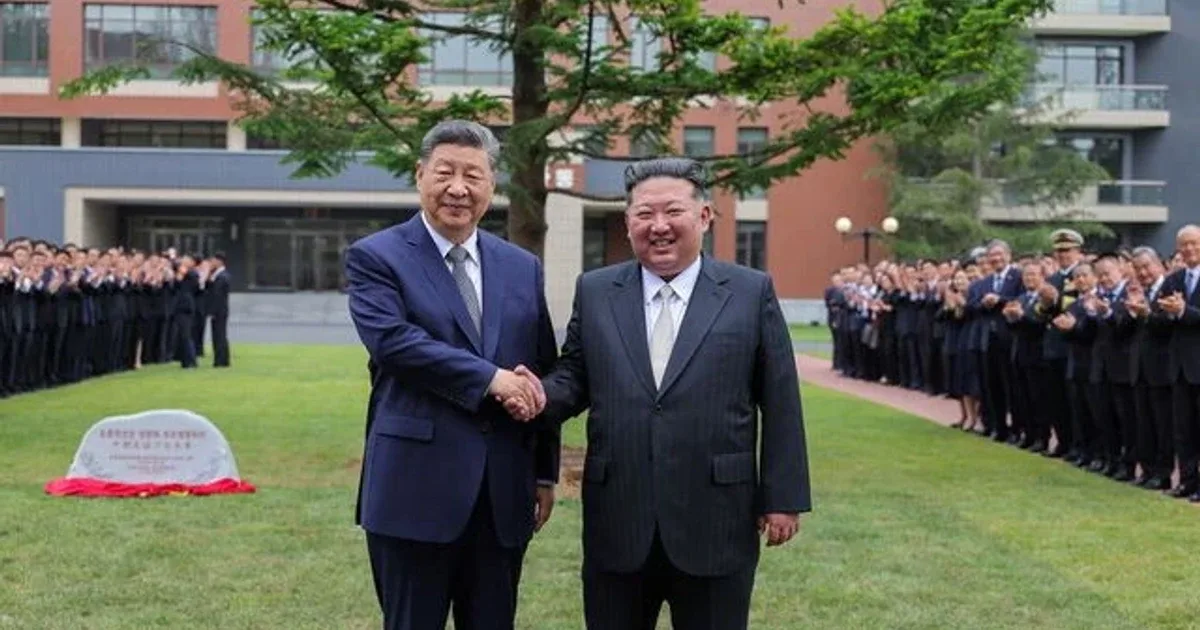
Chinese President Xi Jinping’s recent visit to Pyongyang highlighted a renewed phase of cooperation between China and North Korea, marking a notable departure from years of diplomatic stagnation and pandemic-induced isolation. This was Xi’s first visit in seven years, underscoring a strategic effort to deepen bilateral ties amid shifting regional dynamics.
The two leaders announced an “important consensus” intended to bolster peace and stability in the region, while deliberately avoiding public discussion of denuclearization—a key point of contention for the United States and its allies. Instead, Xi and Kim Jong Un emphasized expanding collaboration across political, economic, cultural, and strategic domains.

This visit coincided with the gradual restoration of practical links disrupted since early 2020. Border crossings reopened after being sealed at the onset of the COVID-19 pandemic, and transport connections resumed. Freight trains between China and North Korea restarted in late 2022, followed by the return of passenger rail services connecting Pyongyang and Beijing earlier this year after a six-year hiatus. Currently, the Pyongyang-Beijing train operates multiple times weekly, while daily service runs between Pyongyang and the Chinese border city of Dandong.
Chinese state media underscored cooperation in sectors such as agriculture, technology, and construction as part of the broader strategy for enhanced engagement. Symbolic gestures further reinforced this thaw: Xi and Kim visited the Sino-Korean Friendship Tower, honoring Chinese soldiers from the Korean War, and toured a political training school for party officials. The timing of the visit also aligned with the 65th anniversary of the China-DPRK Treaty of Friendship, Cooperation and Mutual Assistance, highlighting long-standing diplomatic bonds.
The renewed partnership poses challenges for Washington and other regional players relying on sanctions and diplomatic isolation to influence North Korea’s policies. China remains Pyongyang’s most significant diplomatic and economic supporter, and this deepening alliance complicates efforts to pressure North Korea on issues like its nuclear program.