

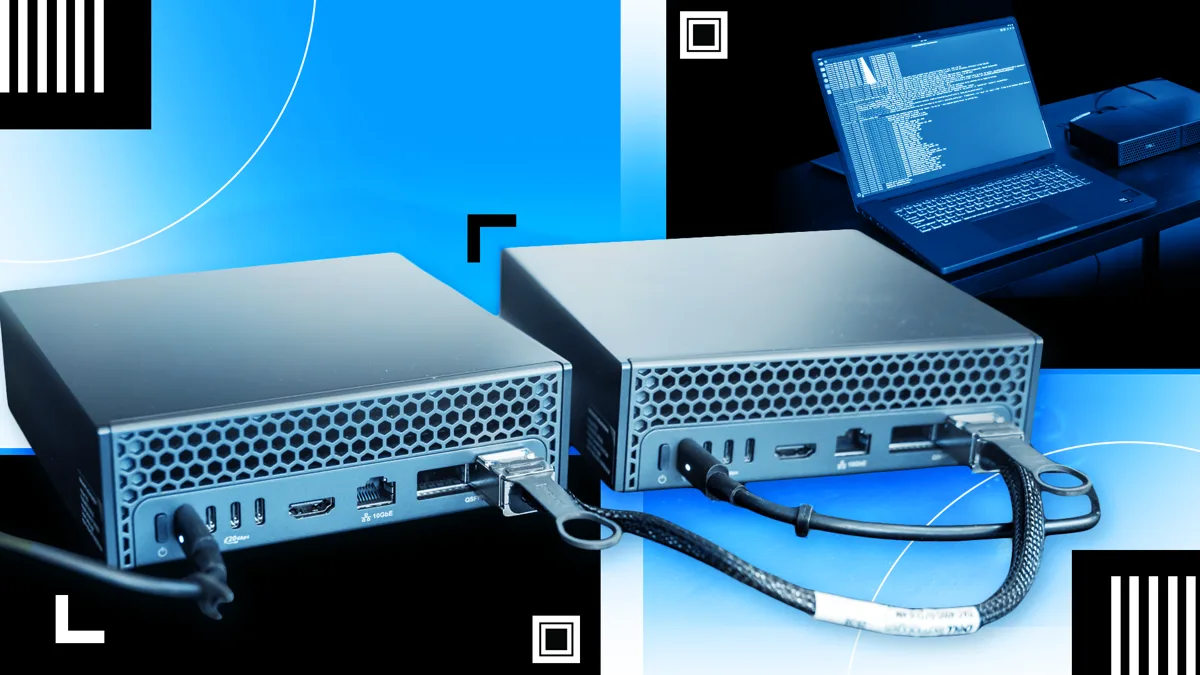
Clustering AI hardware marks a significant step for developers aiming to handle large-scale models beyond the limits of a single machine. By connecting two Nvidia DGX Spark GB10 units, a powerful AI computing platform, users can combine their processing capabilities and memory, expanding the scope of AI tasks they can tackle simultaneously.
A single GB10 system is already a potent machine, equipped with Nvidia’s Grace Blackwell superchip designed for AI workloads. However, complex AI projects often demand more resources than a single GB10 can supply. Clustering two units leverages software called tensor parallelism, which splits an AI model across multiple processors, allowing the combined systems to share computational loads effectively and increase overall throughput.

The process is not straightforward, especially outside Nvidia’s official setup guides. The author of this experiment encountered various challenges, including navigating Linux-based configuration and managing interconnectivity issues between the two machines. Despite the technical hurdles, successfully linking the GB10s unlocks a level of performance that supports multi-node AI development at a scale previously reserved for enterprise-level infrastructure.
While the concept of clustering may seem intimidating to individual developers or smaller teams, this hands-on approach illustrates that it is achievable with patience and a willingness to troubleshoot. Still, this level of system integration comes at a high cost. Since its launch, the GB10’s price has risen sharply due to memory shortages and high demand, climbing from an initial $3,000 to prices well above $4,500, placing it in the realm of high-end desktop workstations.
For AI enthusiasts who need to run multiple or more demanding models without compromising speed or capacity, embracing multi-node setups like this one can be a meaningful investment. Beyond the performance gains, the setup offers a glimpse into the future of accessible AI development where scalable hardware configurations become viable for home labs and small offices.