

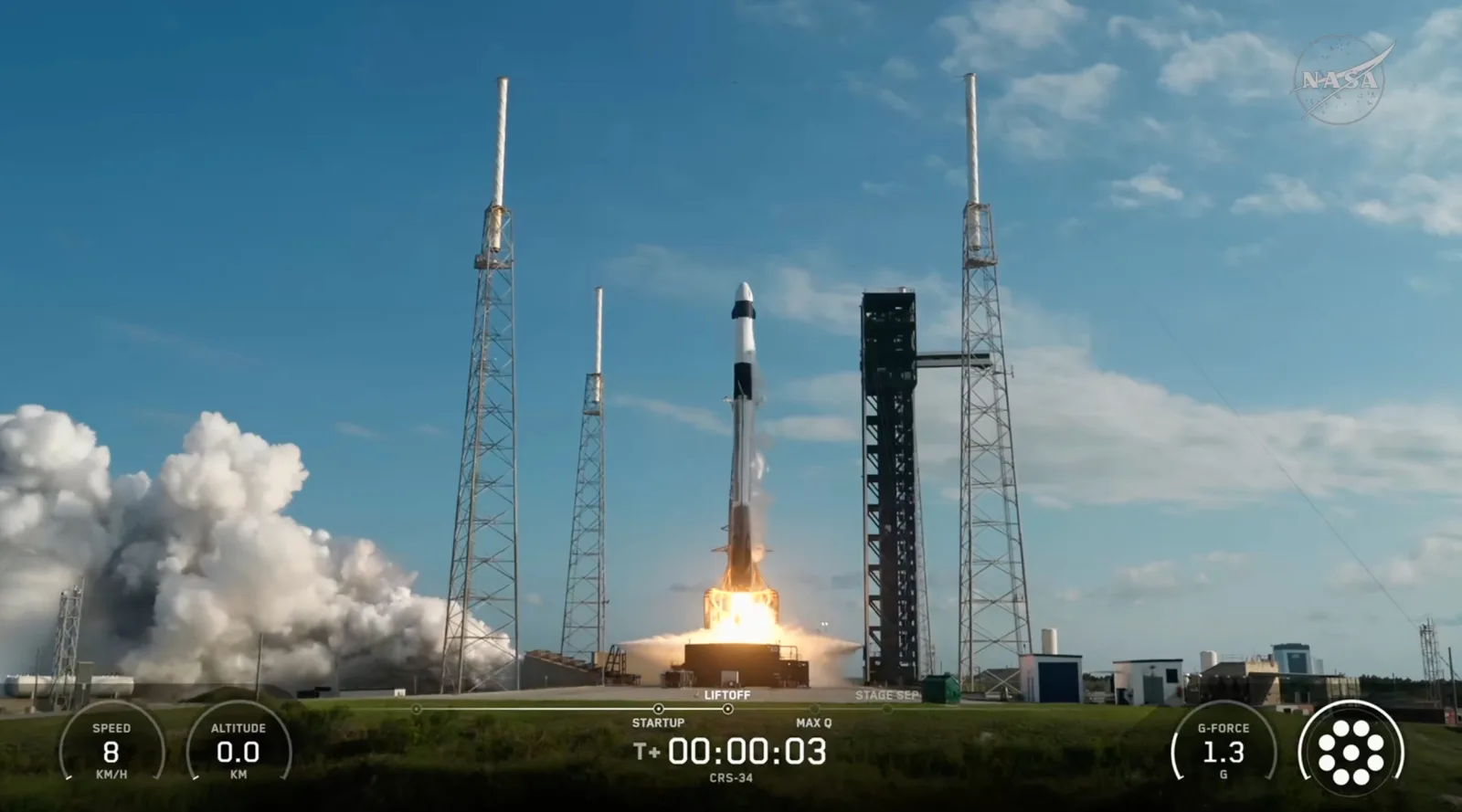
SpaceX’s Falcon 9 rocket took off carrying the Dragon CRS-34 cargo spacecraft loaded with nearly 3,000 kilograms of supplies and research equipment bound for the International Space Station. The launch occurred after two weather-related postponements from Cape Canaveral Space Force Station. About ten minutes after liftoff, Dragon separated from the Falcon 9 upper stage, beginning its journey to the orbital laboratory.
The cargo Dragon capsule, designated C209, is reaching a milestone as it flies its sixth mission to the ISS, becoming the first cargo Dragon to do so. This reusable spacecraft first visited the station in 2021. The certification process for this mission focused specifically on the unique hardware adjustments required for cargo configuration, building on previous certification work done for the crewed Dragon vehicles.

The mission carries 2,948 kilograms of cargo, including an 816-kilogram external payload named Space Test Program-Houston 11, a collaboration between NASA and the U.S. Space Force. This payload features experiments such as STORIE, which will investigate charged particles in the space environment. In total, the payload includes more than 50 scientific investigations supported by NASA, international partners, and the ISS National Lab, covering research that supports future exploration and commercial initiatives.
NASA officials note that as the ISS approaches its planned retirement later this decade, the research focus remains strong, with efforts becoming more precise rather than shifting direction. The CRS-34 mission is the second of four Dragon flights planned for 2026, following February’s Crew-12. Upcoming station missions include the Crew-13 launch scheduled for mid-September and the CRS-35 cargo run planned for the fall season.
Additional scheduled missions to the ISS in 2026 include the Soyuz MS-29 crewed flight expected in July, a Progress cargo delivery in early September, and a Cygnus resupply later in the year. Meanwhile, NASA continues efforts to schedule Boeing’s CST-100 Starliner uncrewed test flight, which was anticipated this year but remains unscheduled due to investigations of anomalies during a previous crewed test flight.