

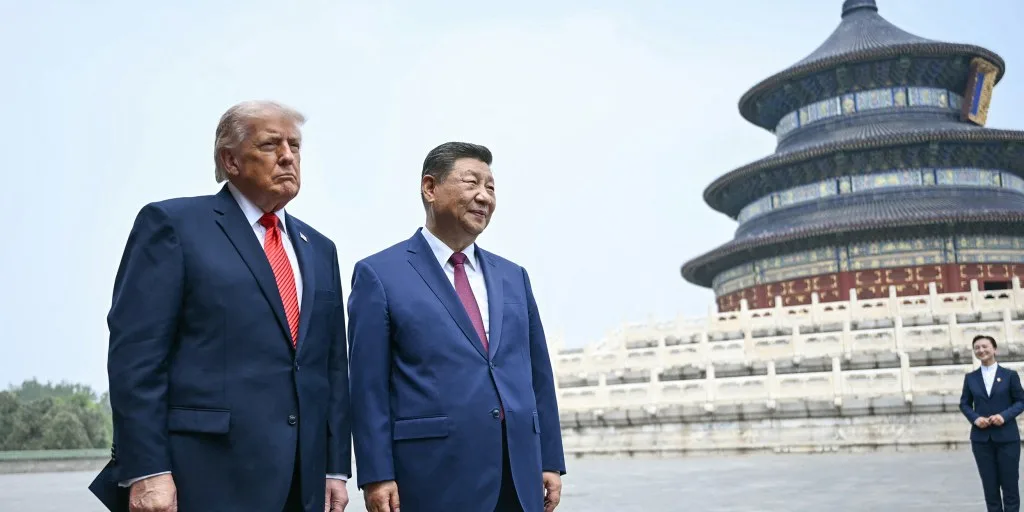
President Donald Trump concluded his summit with Chinese President Xi Jinping without achieving significant progress on several critical issues that continue to strain U.S.-China relations. Though both leaders exchanged praise and engaged in broad discussions, no sweeping agreements emerged, reflecting persistent divides on matters such as technology competition, Taiwan’s status, Iran, and supply-chain vulnerabilities.
One of the most sensitive topics remains Taiwan. Xi emphasized the issue’s central importance to China, warning of potential clashes if the United States does not handle it carefully. Contrastingly, the U.S. official summary of the talks omitted mention of Taiwan, though Trump later revealed he had discussed arms sales to the island in detail with Xi. He indicated a decision on a long-pending arms package would be forthcoming, raising concerns among advocates of Taiwan who view U.S. consultations on arms sales as contrary to established policies.

Regarding trade, Trump stated that tariff reductions were not on the agenda. Beijing faces multiple economic challenges, including youth unemployment and energy uncertainties linked to the conflict in Iran. A former senior trade official from the Trump administration described China’s current focus as survival under continued U.S. trade restrictions, underscoring Trump’s unwillingness to offer major concessions. The summit functioned more as a damage-control exercise than a platform for resolving foundational disputes.