

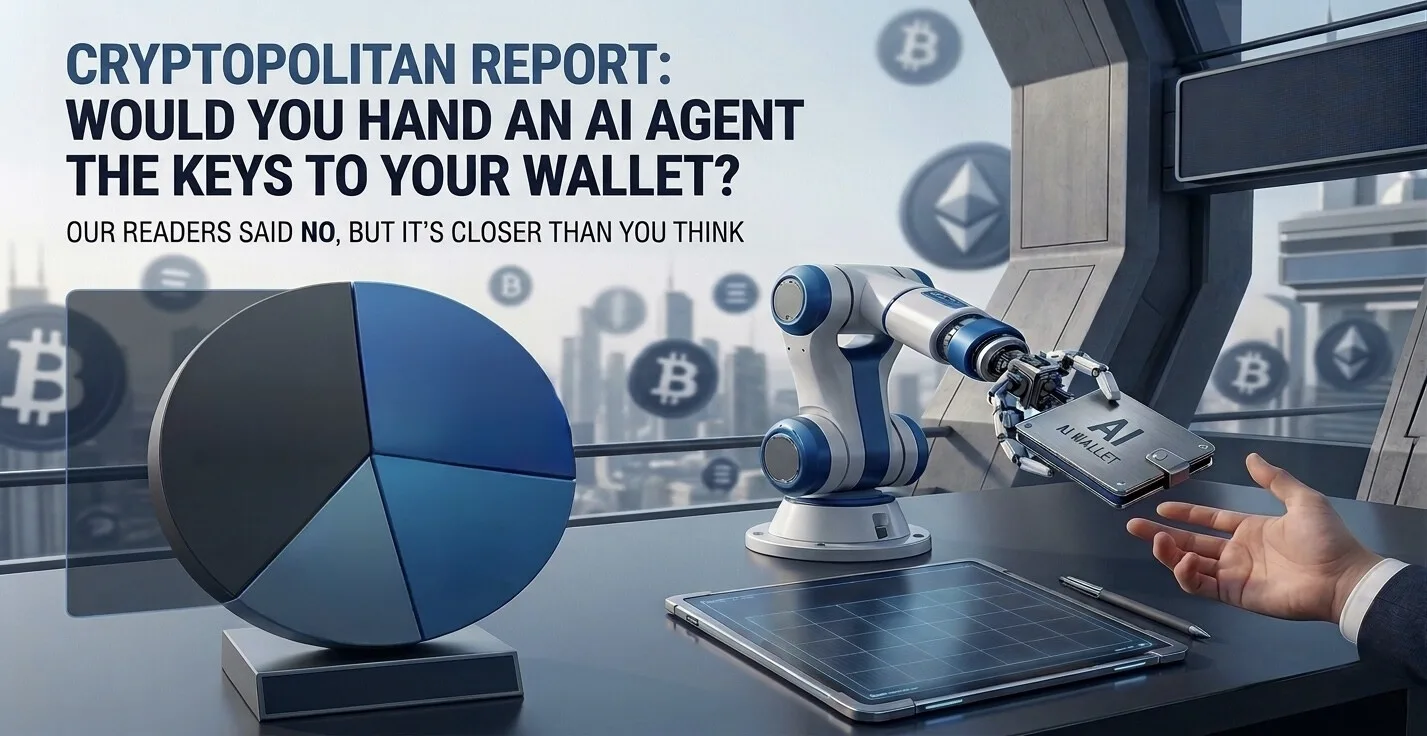
The integration of artificial intelligence into cryptocurrency wallets is rapidly advancing, with leading companies unveiling products that allow AI agents to autonomously manage crypto assets under strict user-imposed controls. MetaMask recently introduced its Agent Wallet, a self-custodial solution enabling AI to execute trades and decentralized finance (DeFi) activities across multiple blockchain networks while granting users full ownership of their keys.
MetaMask’s wallet supports a range of functions, including swaps, perpetual futures, prediction markets, and liquidity provision on nine EVM-compatible chains plus Hyperliquid. Users define parameters such as daily spending limits, approved protocols, and mandatory two-factor authentication (2FA) for exceptions. The wallet incorporates real-time threat scanning for each transaction, backed by a security guarantee of $10,000 coverage on transactions deemed safe.

However, MetaMask is not the first in this space. Coinbase launched its Agentic Wallet early this year, built from the ground up to facilitate non-human operators. The product leverages the x402 payments protocol tailored specifically for machine-to-machine crypto transactions. Unique hardware isolation ensures that AI agents never directly access private keys, enhancing security. Since its debut, x402 has supported nearly half a million active AI agents and processed over 165 million transactions, amassing more than $50 million in cumulative volume. Weekly transaction volumes surged by approximately 265% in recent months, highlighting swift adoption.
Other industry players have entered the market with AI-capable wallets secured through advanced cryptographic methods like multi-party computation (MPC). ArtemisMoonPay integrated Ledger wallets for AI-driven transactions and helped establish the Open Wallet Standard, supported by heavyweights like PayPal and the Ethereum Foundation. The x402 Foundation, housed within the Linux Foundation, counts tech giants such as Google, Visa, AWS, and Stripe among its backers, signaling broad institutional support beyond crypto-native companies.
While the technology enabling AI-managed wallets is mature and in active use, adoption remains mixed. A recent poll revealed that most users remain hesitant to entrust AI with full control over their crypto holdings, despite growing availability and security protocols. This cautious stance persists amid discussions about the emerging “agentic economy,” a term coined by Coinbase’s CEO to describe an ecosystem where autonomous AI agents perform economic activities, potentially rivaling human-driven markets in scale and influence.