

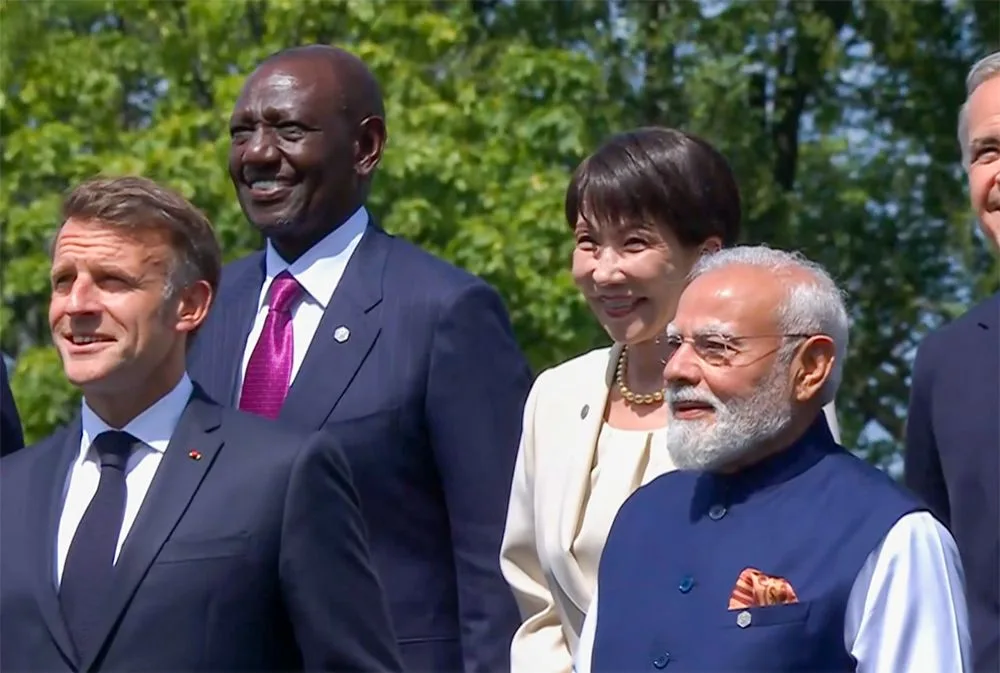
India’s ongoing participation in the G7, marked by its 13th invitation and the Prime Minister’s seventh appearance since 2019, underscores its rising importance in global diplomacy. Although India is not a formal member, engagement with the G7 provides it with a crucial platform to interact with powerful Western European nations collectively, thereby enhancing the group’s relevance in a more multipolar world.
The 2026 summit in France highlighted India’s strengthened ties with Europe, especially through its strategic partnership with France and deepening relations across the continent. This evolving relationship reflects a shift in India’s foreign policy focus over the last decade, which traditionally concentrated on its immediate neighborhood and Indo-Pacific region, but now includes Europe as a key partner.

Beyond bilateral and regional interests, India’s role in the G7 is shaped by its position as a representative of the Global South. Holding the BRICS presidency this year, India bridges the concerns of developing nations on issues such as development finance, food security, climate justice, energy transitions, and reforms of international institutions. Through this lens, India’s voice adds normative weight and legitimacy to the G7’s conversations, addressing challenges that resonate globally.
The contrast with China is notable. Despite being the world’s second-largest economy, China remains outside regular G7 invitations, reflecting the group’s cautious stance amid rising geopolitical tensions. India’s repeated presence signals the G7’s preference to engage with it as a strategic partner, distinguishing between these two major Asian powers. This differential approach mirrors broader concerns over China’s assertiveness, strategic competition with Western countries, and its economic influence tactics.
India’s engagement with the G7 does not promise immediate economic benefits or formal membership but offers prestige, expanded networking, and a platform to influence global norms and policies. This fosters India’s image as a constructive actor within a complex international order increasingly defined by multipolarity and evolving alliances.