

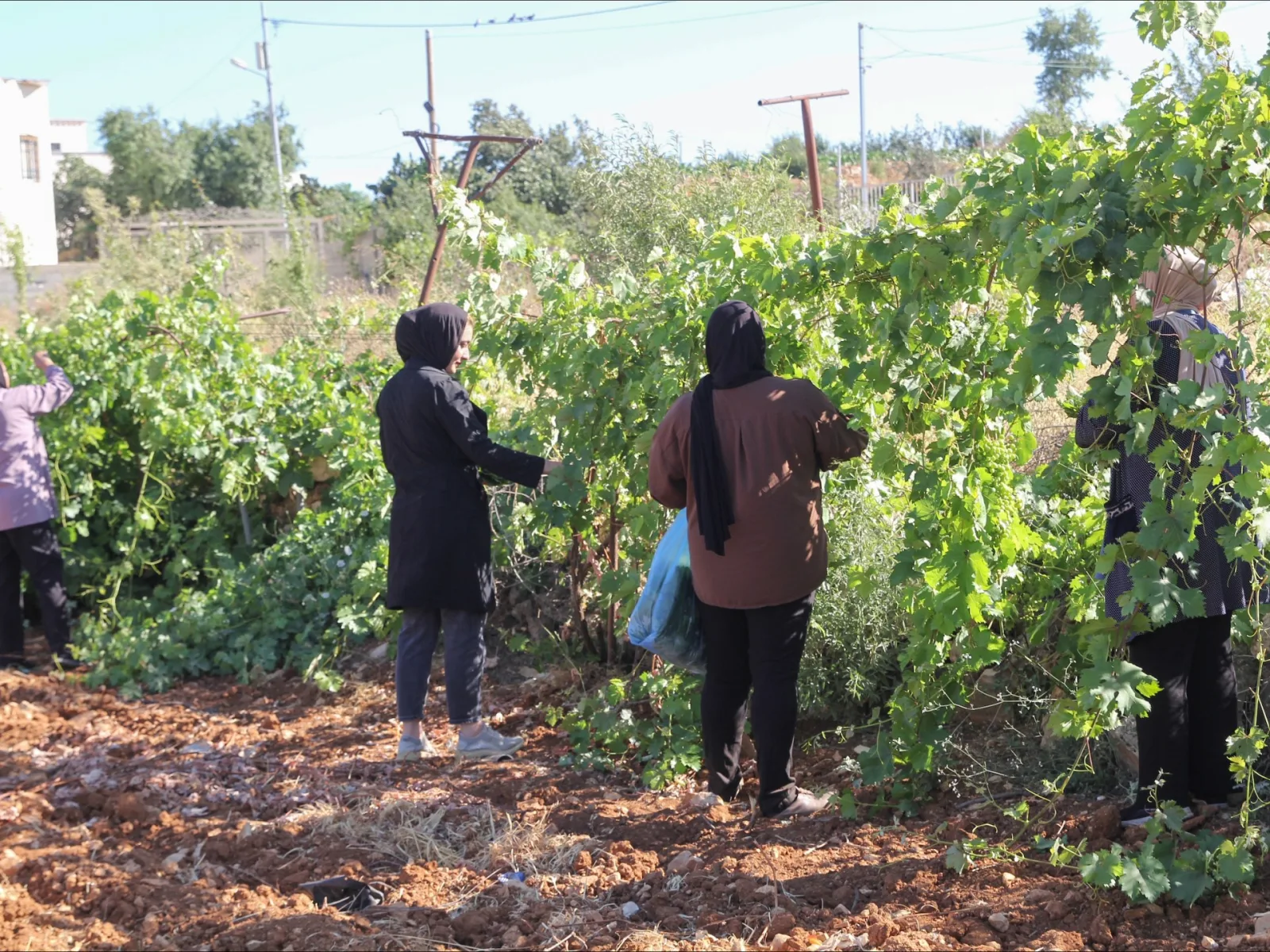
Amal Slaibi has watched helplessly as her family’s orchard in the occupied West Bank was uprooted and destroyed by Israeli military forces, ending decades of agricultural livelihoods. The lush vineyard and peach trees that once provided a reliable income for her family were razed near the illegal Israeli settlement of Karmei Tzur, which expanded into their ancestral land starting in the 1980s.
The destruction occurred last November when Israeli bulldozers leveled Slaibi’s seven-dunam orchard, alongside roughly 30 dunams owned by her uncle. Following the demolition, soldiers enforced a strict 500-metre exclusion zone, barring the family entirely from the area despite their generational ownership. This move effectively stripped them of their primary economic asset and source of sustenance.

Before the orchard’s destruction, the annual harvest generated approximately 10,000 shekels, enough to support the Slaibi family of 12. Although they attempted to salvage their livelihoods by working distant, less fertile land, the yield and quality could not compare. The bulldozed land was known for its fertile, moist soil ideal for crops, whereas the alternative lands were dry and less productive.
The Israeli military tightening restrictions on Palestinian farmers has worsened since the outbreak of conflict in Gaza in late 2023. Access to farmlands close to Israeli settlements is now sporadic and severely limited. Palestinians are often granted entry just a few hours monthly, forcing them to rush to care for olive groves and vineyards that remain critical financial lifelines. This truncated access rarely allows for adequate cultivation or harvesting, putting future production in jeopardy.
These restrictions leave farmers unable to plough or tend to their land consistently. In one instance, when Amal and her elderly father tried to plough their land, they were fired upon by settlement security and narrowly escaped harm. The destruction and restricted access have not only devastated the current crops but made it difficult for families to define land boundaries, which have been obscured by leveling.
The Palestinian Ministry of Agriculture has highlighted the unprecedented scale and danger of such restrictions. For many Palestinian families, land cultivation is a core economic and cultural practice now increasingly imperiled. The combination of land confiscations, settler expansion, and army enforcement controls translates into lost income and deepening economic hardship for West Bank farmers, who struggle to maintain their livelihood under ever-tightening constraints.