

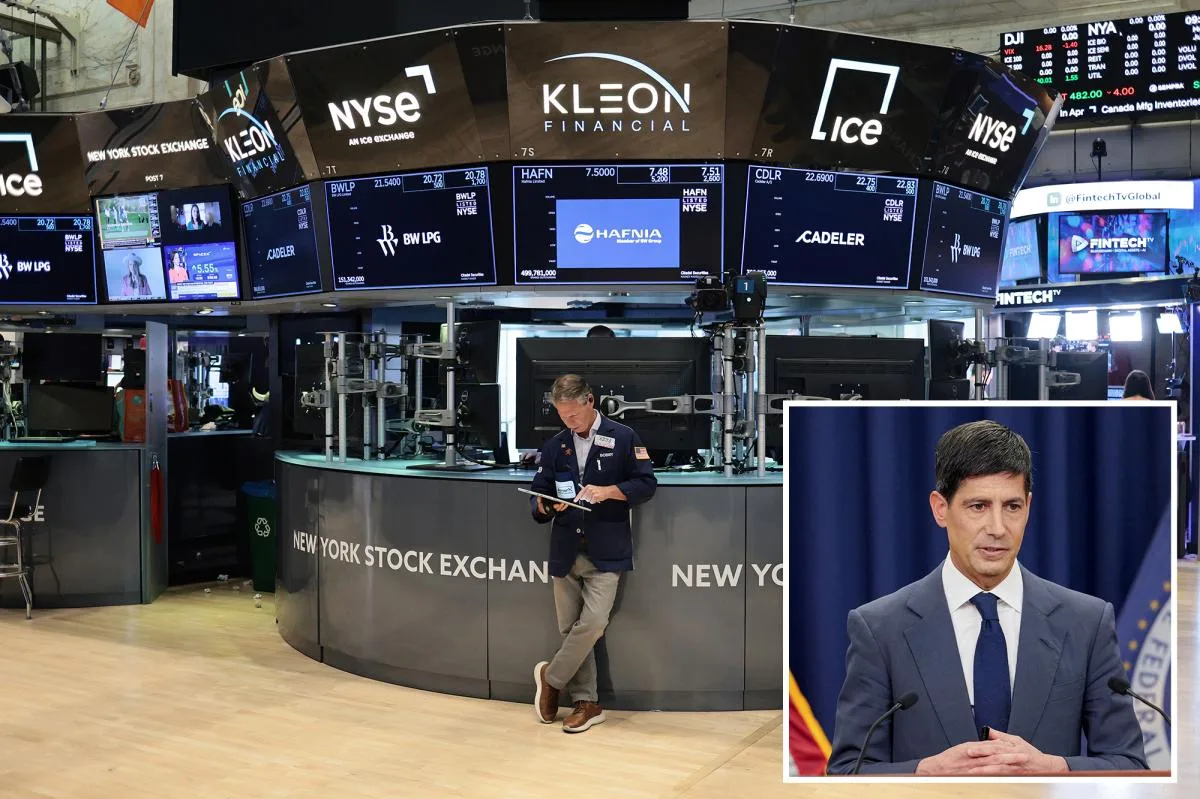
Stocks rallied Thursday morning as investors sought to recover from a steep sell-off triggered by the Federal Reserve’s unexpected hawkish tone on inflation. The Dow Jones Industrial Average surged by 256 points, while the S&P 500 and Nasdaq gained 1% and 1.3%, respectively, signaling renewed optimism amid uncertainty about future rate hikes.
A notable driver behind the market uplift was Intel, which soared over 7%, driven by news of a partnership with Apple to design and manufacture chips domestically. This announcement highlighted the growing appetite for American-made semiconductors amid rising global demand, especially for data centers. Other chipmakers followed suit, with Nvidia and Micron Technology shares also posting strong gains, supported by ongoing price increases in the industry.

The recent surge in chip prices reflects the significant demand pressures stemming from power-heavy data centers, fueling investor enthusiasm for enhanced U.S. production capacity. Apple plans to raise product prices to offset these higher costs, according to its CEO, signaling broader implications for consumer technology pricing.
Meanwhile, shares of SpaceX declined sharply by nearly 7% on their fifth trading day after a record-breaking initial public offering. Despite the drop, the company maintains a market capitalization of $2.37 trillion, ranking it among the top six U.S. companies by valuation. Earlier in the week, SpaceX briefly surpassed Amazon and Microsoft in market value, underscoring its rapid growth trajectory.
The market’s turmoil on Wednesday followed the Federal Reserve Chair Kevin Warsh’s first policy meeting, where he adopted a tough anti-inflation stance that unsettled investors expecting easier monetary policies. Warsh’s hawkish signals marked a clear shift away from the “easing bias” that had permeated Fed communications earlier in the year.
Federal Reserve officials collectively raised their inflation forecast for this year to 3.6%, considerably up from the previous 2.7% projection in March. Simultaneously, the Fed drastically reduced the likelihood of interest rate cuts in 2026, now anticipating a median of one quarter-point rate hike instead.
The Fed’s rate outlook also changed markedly, with nearly half of officials expecting at least one rate increase before the end of the year—a sharp rise from a single official projecting hikes just months ago. Warsh’s cautious approach, including his abstention from the central bank’s “dot plot” forecasts and forward guidance, signals his desire to assert credibility early by confronting inflation risks head-on.