

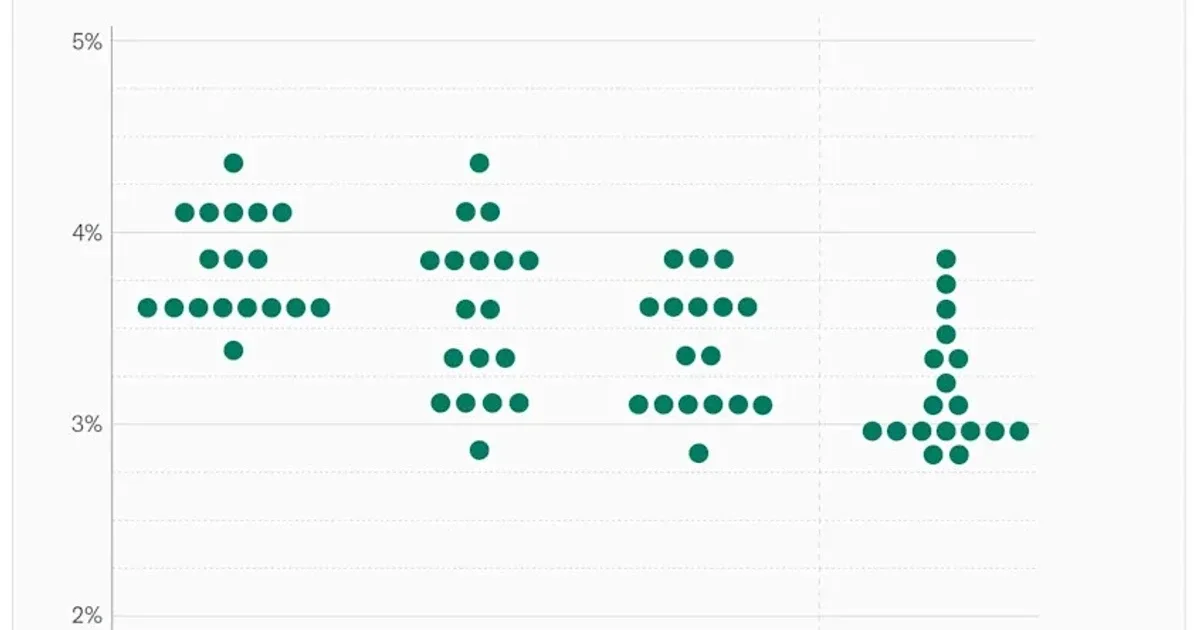
Federal Reserve official Kevin Warsh chose not to submit his interest rate forecast in the most recent Summary of Economic Projections, reducing the total count of projected points in the widely followed dot plot from 19 to 18. This deliberate omission has raised speculation about whether the Fed is reconsidering its long-standing approach to policy guidance.
Since its inception in 2012, the dot plot has served as a key tool for market participants to gauge policymakers’ expectations on the trajectory of interest rates. While advisory and anonymous, it carries significant influence over trading, borrowing costs, and Treasury yields. Warsh’s absence from this edition of projections represents more than a mere data gap—it highlights skepticism toward the framework itself and questions the Fed’s future transparency.

The June projections overall indicated a more hawkish outlook for 2026, with no anticipated rate cuts. Markets reacted sharply, reflecting the importance of the dot plot in shaping expectations. Yet, Warsh’s stance underscores a concern that fixed forecasts may constrain policymakers if economic conditions diverge from earlier assumptions.
Beyond his refusal to submit a forecast, Warsh revealed that the Federal Reserve is conducting a broader internal review of its communication strategies. This includes evaluating the value and structure of press conferences, the dot plot, meeting timetables, as well as transcripts and minutes of policy meetings. He expressed openness to possible changes by the end of the year, suggesting a fundamental reassessment of how the central bank conveys its intentions without limiting its flexibility.
Traditionally, the Fed has incrementally increased transparency with forward guidance to help markets anticipate its reaction function. However, Warsh’s critique signals a cautionary stance toward the risks of overcommitment through detailed forecasts. The June omission could mark the beginning of a significant shift in Federal Reserve communication, prioritizing discretion over predictability.