

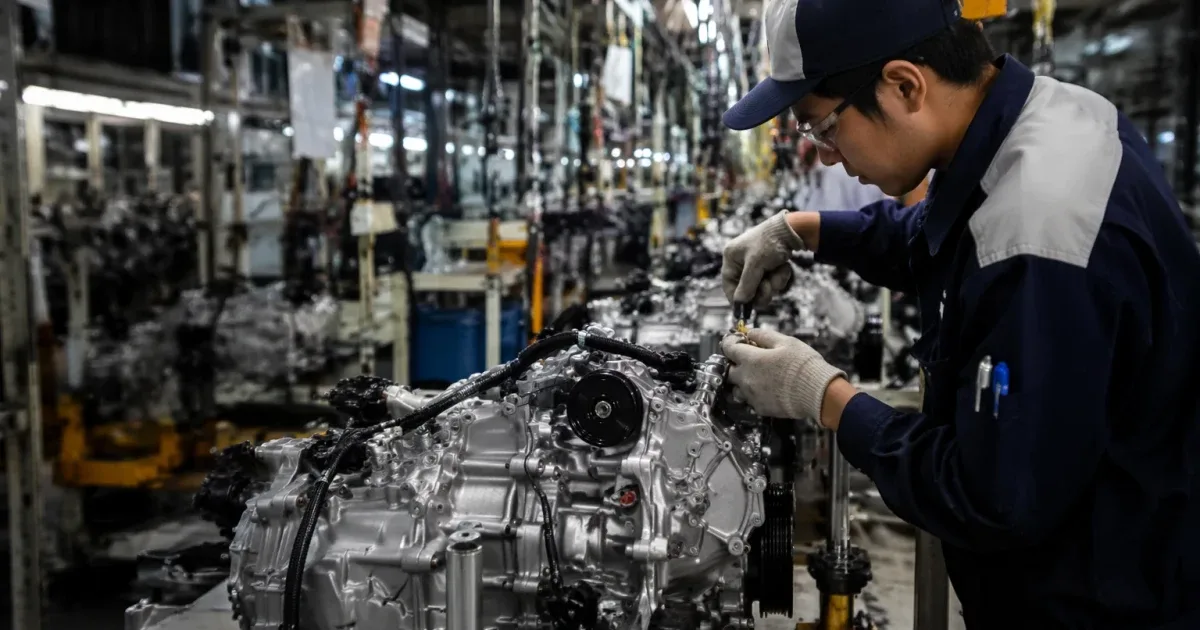
Japan’s biggest manufacturers maintained a positive outlook for the fifth quarter in a row, signaling continued confidence despite mounting economic challenges. According to the Bank of Japan’s latest tankan survey, the diffusion index for major manufacturers rose modestly, reflecting steady optimism among large firms while overall recovery remained limited.
The tankan, a vital measure of corporate sentiment that balances favorable and unfavorable business conditions, showed the index for major manufacturers increased to 22 from 17 the previous quarter. Nonmanufacturing sectors, including services, saw only a slight rise. This suggests that while prominent exporters are projecting stronger performance, the broader economy faces ongoing pressures.

One key challenge comes from rising inflation, particularly due to elevated fuel prices linked to geopolitical tensions in Iran. Although crude oil prices have eased following a U.S.-Iran interim agreement, Japan’s heavy reliance on imported oil and gas means the inflation impact persists. The weakening yen, trading near a four-decade low against the dollar, further compounds costs for energy and imported materials, squeezing manufacturers that rely heavily on global supply chains.
The Bank of Japan has responded by raising its benchmark interest rate to 1%, the highest level in three decades, aiming to curb inflation without stifling growth. Despite higher borrowing costs, investment remains resilient, especially among large and mid-size companies investing in capacity and equipment. Smaller firms, however, are lagging behind, highlighting a divide within Japan’s corporate landscape.
Analysts point to the delicate balance firms face: stable sales growth among large exporters contrasts with the risk of declining profits if energy prices stay high and the yen remains weak. This environment is further complicated by Japan’s demographic challenges, including an aging population and persistent labor shortages, which make sustained economic expansion more difficult.