

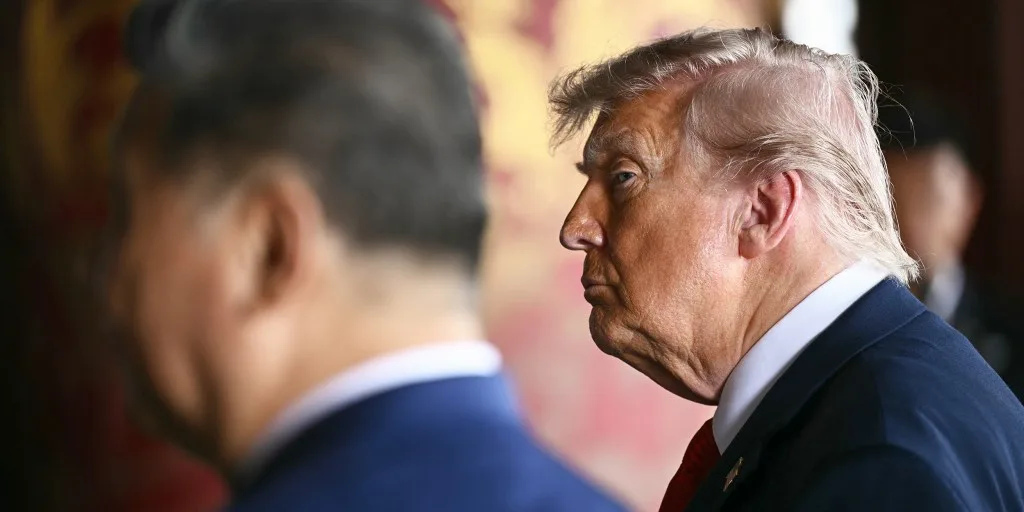
President Donald Trump concluded his recent trip to China with optimistic statements but no significant agreements on critical issues like trade or Iran. While he announced commitments such as a large Boeing jet purchase and billions in soybean sales, details behind these deals remain vague.
One of the trip’s most notable developments was a sharp warning from China’s President Xi Jinping regarding Taiwan. Chinese officials reported Xi cautioned that mishandling Taiwan could trigger “clashes and even conflicts,” yet the U.S. refrained from issuing a public response. This silence has raised doubts about who gained the upper hand in the discussions and whether China feels emboldened by the encounter.

On Iran, both Trump and Secretary of State Marco Rubio relayed that China expressed opposition to Iran obtaining nuclear weapons and showed concern for reopening the Strait of Hormuz, a crucial oil passage for Beijing. Nonetheless, no clear commitment emerged from China to actively facilitate reopening the strait.
Back in the United States, pressure is mounting as the Iran conflict remains unresolved. Trump continues to weigh options, including military action, while public disapproval of the war grows amid rising gas prices and economic strain. A CNN poll indicates that a majority of Americans blame the president’s policies for increased living costs and negative financial impacts tied to the conflict.
Analysts and political strategists highlight the ambiguity left by the summit, suggesting that China’s behavior remains largely unchanged. As the administration grapples with its next move on Iran and relations with China, analysts anticipate further scrutiny during upcoming political events.