

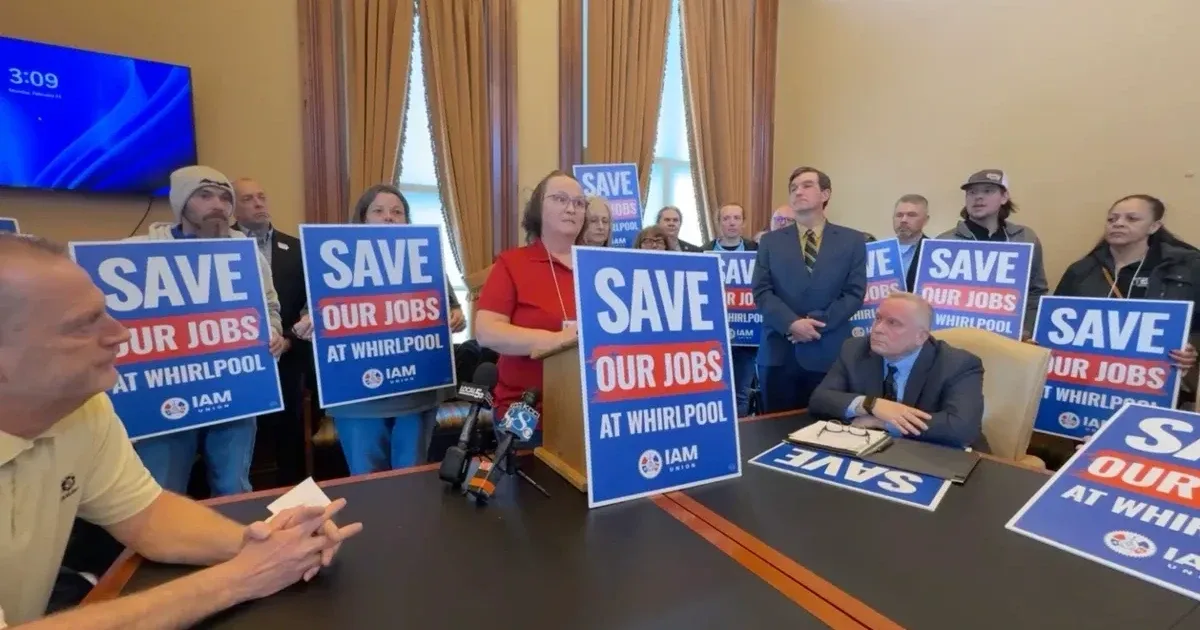
Whirlpool is set to cut 288 additional jobs at its Amana, Iowa refrigerator factory, marking a significant reduction that leaves the plant operating just one assembly line. This move brings total layoffs at the facility to 879 since mid-2025, underscoring ongoing difficulties in restoring manufacturing employment despite protective tariffs.
The company attributes these job cuts to a long-term modernization strategy intended to keep the plant competitive. However, the drastic downsizing contrasts sharply with the factory’s past output, when it maintained five lines and produced nearly a million units annually. This sharp decline challenges the assumption that tariffs alone can revive manufacturing jobs, especially since Whirlpool manufactures roughly 80% of its U.S. sales domestically across multiple plants.

Despite expectations that Whirlpool would benefit from increased tariffs on imports—introduced under the former administration—the company faced rising steel and component costs alongside weakening housing markets that reduced appliance demand. These pressures hurt profit margins and forced Whirlpool to cut costs aggressively. In its first-quarter report released in early May, Whirlpool revealed plans for double-digit price hikes and rapid cost reductions amid a sharp downturn in U.S. consumer confidence and appliance sales, which the company described as recession-level.
The impact reverberated on financial markets as Whirlpool’s shares plunged to levels not seen in over a decade, following a halving of its annual profit outlook and a suspension of dividend payments. These developments contrast with earlier executive claims that the company would be a “net winner” from tariff policies. The International Association of Machinists and Aerospace Workers criticized Whirlpool for shrinking jobs in Iowa while expanding operations in Mexico, raising concerns about the true benefits of tariff-driven strategies for domestic workers.
Whirlpool’s legacy extends deep into the American industrial fabric, with roots dating back to the early 20th century and the Amana brand established in the 1930s. Nonetheless, persistent challenges such as automation, shifting consumer demand, and restructuring efforts continue to reshape its manufacturing footprint, as evidenced by ongoing job losses in rural manufacturing hubs like Amana.